You can complete this on Imagera without installing software: upload a real source file, describe the change, confirm credits up front, generate, and review before you publish. Best AI Content Detection Tools Online (2026 Complete Guide) — this guide covers the steps, quality checks, and when to open related tools.
AI-generated content now spans every media type: images, text, audio, video, and deepfakes. With 8 million deepfakes shared online in 2025, 51% of marketers using AI writing tools, and voice clones achievable from just 3 seconds of audio — the need for reliable AI content detection has never been more urgent.
This is your comprehensive guide — a deep dive into how AI content detection works across all five modalities, which tools perform best, how enterprises deploy detection at scale, and where the technology is headed.
::key-takeaway TL;DR: AI content detection covers five modalities, each with specialized detection methods and accuracy rates. Imagera AI is the only platform offering all five in one place: image detection (99.7%), text (98.3%), audio (97.4%), video analysis (96.8%), and deepfake detection (99.1%). This pillar guide covers everything from technical methods to enterprise deployment. ::
Quick answer: The best AI content detection tools in 2026 analyze text, images, video, and audio in one pass and return a confidence score in under a minute. Imagera checks all four media types in a single workflow instead of forcing you to juggle four separate single-purpose apps.
1.How accurate are AI content detection tools in 2026?
No detector is perfectly accurate. Even the strongest tools can misflag edited or human-written work, especially content that has been heavily revised. Imagera runs four media checks (text, image, video, and audio) and returns results in under a minute, so you can cross-reference multiple signals rather than trusting a single score.
2.Which content types can AI detectors actually analyze?
Modern detectors cover four categories: text, images (up to 4K and 8K), video, and audio. Imagera scans all four in one pass, flagging synthetic frames, cloned voices, and machine-written passages together. Combining more than one signal is a more reliable way to reduce false positives than leaning on any single-media checker used alone.
3.Why AI Content Detection Matters in 2026 {#why-detection-matters}
AI content detection isn't just an academic exercise — it's a business necessity, a legal requirement, and a societal safeguard. Here's why:
3.1The Scale of the Problem
- 8 million deepfakes circulated online in 2025, a 900% increase from 2023
- $410 million lost to deepfake fraud in the first half of 2025 alone
- 51% of marketers now use AI writing tools, blurring the line between human and machine content
- 70% of people doubt their ability to distinguish real from fake voices
- 50% of enterprises experienced deepfake fraud in 2024, averaging $450,000 per incident
- Voice clones achievable from just 3 seconds of audio at 85% match
3.2Who Needs AI Detection
| Audience | Primary Use Case | Key Modalities |
|---|---|---|
| Educators | Academic integrity verification | Text |
| Publishers | Content authenticity verification | Text, Images |
| Enterprises | Fraud prevention, brand protection | All five |
| Journalists | Source verification, fact-checking | Images, Video, Audio |
| Legal professionals | Evidence authentication | All five |
| Social platforms | Content moderation at scale | Images, Video, Deepfakes |
| Financial institutions | Voice fraud prevention | Audio, Deepfakes |
| Government agencies | National security, election integrity | All five |
3.3Regulatory Pressure
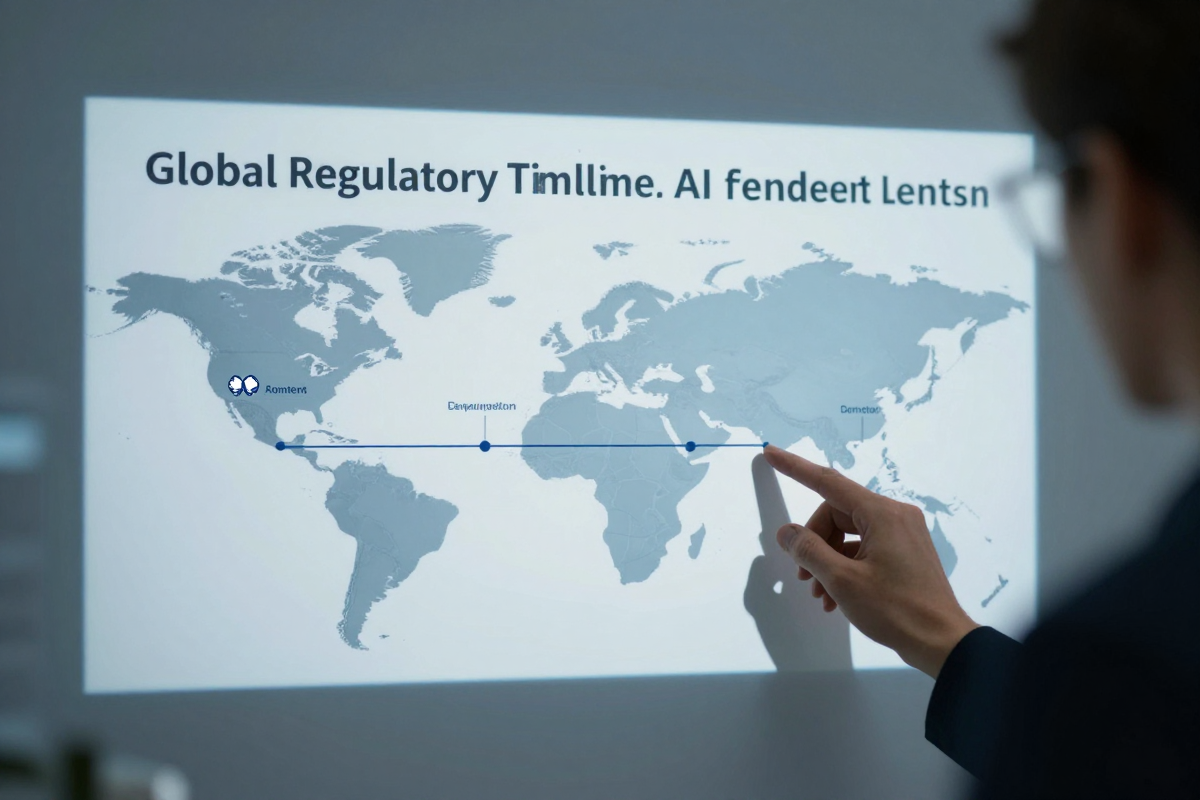
The regulatory landscape is tightening globally:
- EU AI Act — Requires labeling of AI-generated content, effective 2026
- US Executive Order on AI — Calls for content authentication standards
- China's Deep Synthesis Regulations — Mandates watermarking of synthetic media
- C2PA adoption — Adobe, Microsoft, Intel, and 200+ organizations backing content provenance standards
Organizations that can't verify content authenticity face growing regulatory, reputational, and financial risk.
4.The Five Modalities of AI Detection {#five-modalities}
| Modality | What It Detects | Accuracy Range | Key Method | Top Generators |
|---|---|---|---|---|
| Image | AI-generated photos, illustrations | 82-99.7% | Frequency analysis, noise fingerprinting | Midjourney, FLUX, DALL-E, SD |
| Text | ChatGPT, Claude, Gemini output | 80-98.3% | Perplexity, burstiness, stylistic patterns | GPT-5, Claude 4, Gemini 3 |
| Audio | Voice clones, synthetic speech | 85-97.4% | Spectral analysis, micro-tremor detection | ElevenLabs, Bark, Coqui |
| Video | Face swaps, lip-sync manipulation | 90-96.8% | Temporal artifact analysis, frame consistency | Sora 2, Veo 3, Runway Gen-4 |
| Deepfake | Manipulated media across types | 92-99.1% | Multi-signal fusion, provenance checking | FaceSwap, DeepFaceLab, SimSwap |
4.1Why Multi-Modal Detection Matters
AI-generated content rarely exists in isolation. A single piece of disinformation might combine:
- A deepfake video of a public figure making false claims
- Synthetic voiceover matching their exact speech patterns
- An AI-written article providing supporting context and citations
- AI-generated images as fabricated photographic evidence
- An AI-cloned audio recording leaked as a "leaked conversation"
Detecting this requires tools that analyze multiple media types simultaneously. Imagera AI handles all five modalities in a single platform — the only tool that does so.
5.AI Image Detection: How It Works {#image-detection}
AI image detectors analyze frequency distributions, noise fingerprints, and generator-specific artifacts to identify synthetic images. This is the most mature detection modality with the highest accuracy rates.
5.1Technical Methods
Frequency Analysis — Real photos have specific frequency distributions created by camera sensors during the image capture process. AI-generated images produce different frequency patterns, especially in high-frequency details. Detectors analyze the Fourier transform of images to identify these differences.
Noise Fingerprinting — Every camera sensor produces characteristic noise patterns (Photo Response Non-Uniformity). AI-generated images lack these sensor-specific noise signatures. Detectors can identify the absence of expected noise patterns.
GAN/Diffusion Fingerprinting — Each generator architecture leaves identifiable statistical patterns. Midjourney images have different artifacts than DALL-E or FLUX outputs. Detectors trained on each generator can identify the source.
Pixel-Level Analysis — AI generators sometimes produce subtle pixel-level artifacts: overly smooth gradients, periodic patterns in texture regions, or inconsistent JPEG compression signatures.
5.2Accuracy by Generator
| Generator | Detection Accuracy | Key Artifacts |
|---|---|---|
| Midjourney v6 | 99.2% | Skin texture smoothing, hand anomalies |
| FLUX.2 Pro | 98.4% | High-frequency noise patterns |
| DALL-E 3 | 99.5% | Characteristic text rendering, background consistency |
| Stable Diffusion XL | 99.7% | Noise fingerprint absence, frequency distribution |
| Adobe Firefly 3 | 97.8% | Color space artifacts |
| Leonardo AI | 98.1% | Texture repetition patterns |
5.3Manual Visual Tells
When detection tools aren't available, these visual cues help identify AI images:
- Hands and fingers — Extra fingers, fused fingers, impossible joint angles
- Text in images — Garbled, misspelled, or inconsistent text rendering
- Overly smooth skin — Lack of pores, hair follicles, and natural texture
- Background distortions — Warped architecture, impossible geometry, melting objects
- Inconsistent lighting — Shadows that don't match light sources
- Symmetry errors — Earrings that don't match, asymmetric glasses, uneven collars
- Eye reflections — Mismatched or missing catchlights in both eyes
Best tools: Imagera AI (99.7%), Hive AI (89%), Illuminarty (85%)
Deep dive → AI Image Detector Accuracy Test: We Tested 5 Tools Against Every Generator
Visual guide → 10 Visual Signs an Image Was Made by AI
Verification tools → Photo Authenticity Verification Tools
Art-specific → How to Spot AI-Generated Art
6.AI Text Detection: How It Works {#text-detection}
AI text detectors measure perplexity (word predictability), burstiness (sentence variation), and model-specific writing patterns. Text detection is the most widely used modality but also faces the highest false positive rates.
6.1Technical Methods
Perplexity Analysis — AI text is more predictable than human writing. Language models optimize for coherence, choosing the most statistically likely next word. This produces low-perplexity text that flows smoothly but lacks the unexpected word choices humans make. Detectors measure this predictability score.
Burstiness Analysis — Human writing has natural variation: short sentences, then long ones, fragments mixed with complex constructions. AI maintains more uniform sentence length and structure, producing low burstiness. Detectors measure this structural variation.
Stylistic Fingerprinting — Each AI model has characteristic patterns:
- ChatGPT/GPT-5 — Formal, balanced paragraphs, predictable transitions ("Furthermore," "It's worth noting")
- Claude — Cautious phrasing, frequent qualifiers ("however," "it's important to note")
- Gemini — Structured lists, concise summaries, reference-heavy
- DeepSeek — Technical precision, sometimes stilted phrasing
- Llama — Variable quality, more repetitive at lower parameter counts
Classifier Models — Transformer-based models trained on millions of human/AI text pairs learn subtle statistical differences invisible to human readers but measurable by algorithms.
6.2The False Positive Problem
AI text detection has a significant weakness: 15-20% false positive rate on certain human-written content:
- Academic papers — Formulaic structure mimics AI patterns
- Non-native English writers — Simpler vocabulary triggers classifiers
- Legal documents — Predictable, formal language reads as AI
- Technical documentation — Precise, structured prose matches AI output
This is why no AI text detector should ever be used as sole evidence of AI authorship. The 3-tool rule applies: run through at least two detectors plus editorial judgment.
Best tools: Originality.ai (98%), Imagera AI (98.3%), GPTZero (91%)
Deep dive → AI Text Detection: 8 Best Tools to Detect ChatGPT & AI Writing
7.AI Audio & Voice Detection: How It Works {#audio-detection}
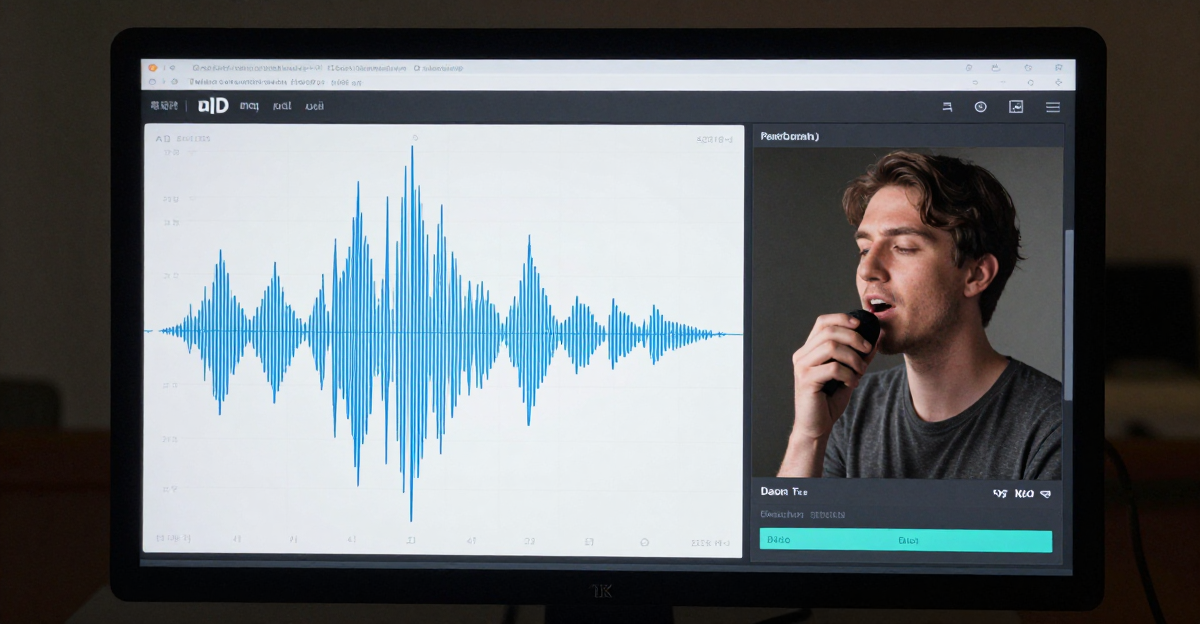
Voice detectors analyze spectral patterns, breathing artifacts, and micro-tremors to distinguish real speech from synthetic clones. This is the fastest-growing threat vector due to voice cloning accessibility.
7.1Technical Methods
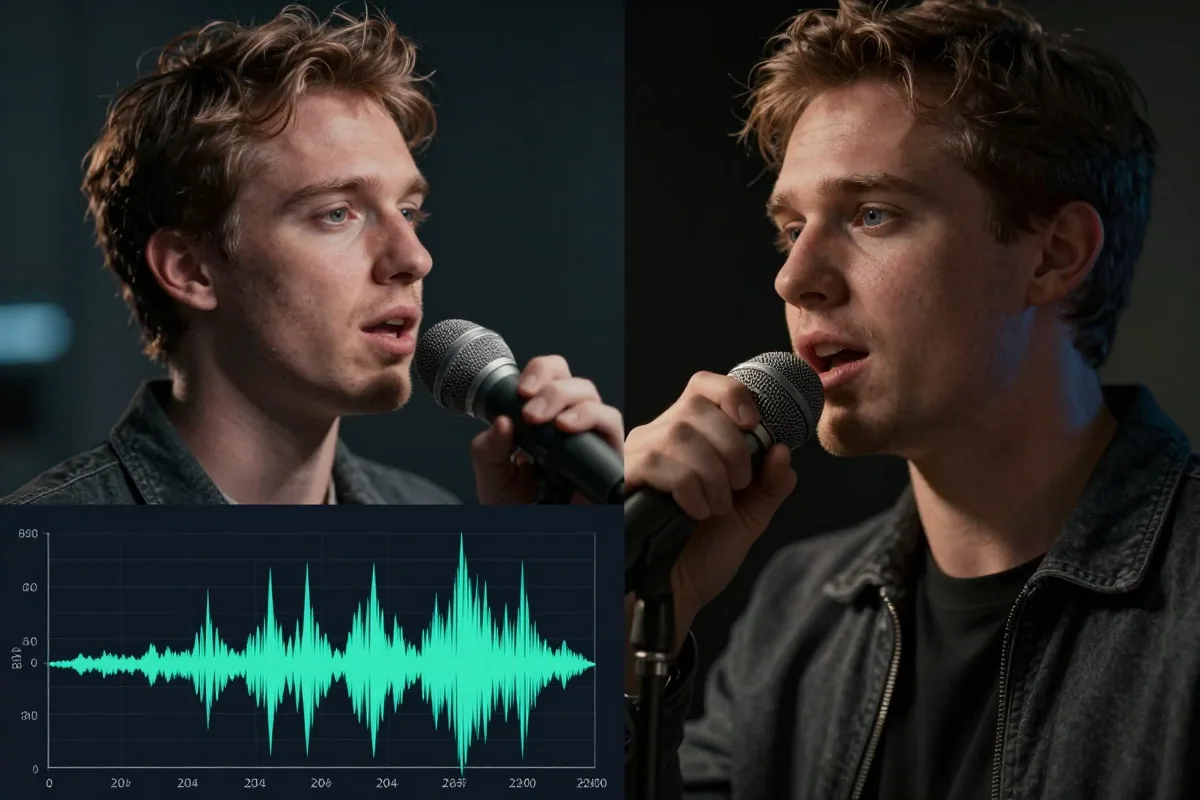
Spectral Analysis — Real human voices produce complex spectral patterns from physical resonance of vocal cords, throat, and mouth. AI voices approximate these patterns but show smoother harmonic distributions and more consistent formant frequencies.
Micro-Tremor Detection — Human speech contains involuntary vocal cord vibrations (micro-tremors) that are extremely difficult to synthesize. These biological signals are present in all real speech and absent in most synthetic audio.
Breathing Pattern Analysis — Real speakers breathe audibly between phrases with natural variation. AI audio often produces unnaturally clean gaps or lacks breathing sounds entirely.
Prosodic Analysis — The rhythm, stress, and intonation of natural speech is more variable than synthetic versions. AI voices struggle with genuine emotional inflection during spontaneous conversation.
7.2The Voice Cloning Timeline
Understanding how quickly cloning technology has advanced:
| Year | Required Audio | Match Quality | Emotional Range |
|---|---|---|---|
| 2023 | 5-10 minutes | 70% match | Limited |
| 2024 | 30-60 seconds | 85% match | Moderate |
| 2025 | 3 seconds | 85% match | Basic |
| 2026 | 3 seconds | 92% match | Convincing |
7.3Manual Audio Tells
When tools aren't available, listen for:
- No breathing between phrases — unnaturally clean gaps
- Flat emotional range — consistent tone regardless of content
- Metallic undertones — subtle digital shimmer on sibilants
- Too-perfect pronunciation — no natural mumbling or slurring
- Consistent pace — unnatural even cadence without acceleration/deceleration
- No verbal fillers — complete absence of "um", "uh", "you know"
Best tools: Pindrop (99%), Imagera AI (97.4%), Resemble AI Detect (93%)
Deep dive → AI Voice & Audio Detection: How to Identify Cloned Voices
8.Deepfake & Video Detection: How It Works {#deepfake-detection}
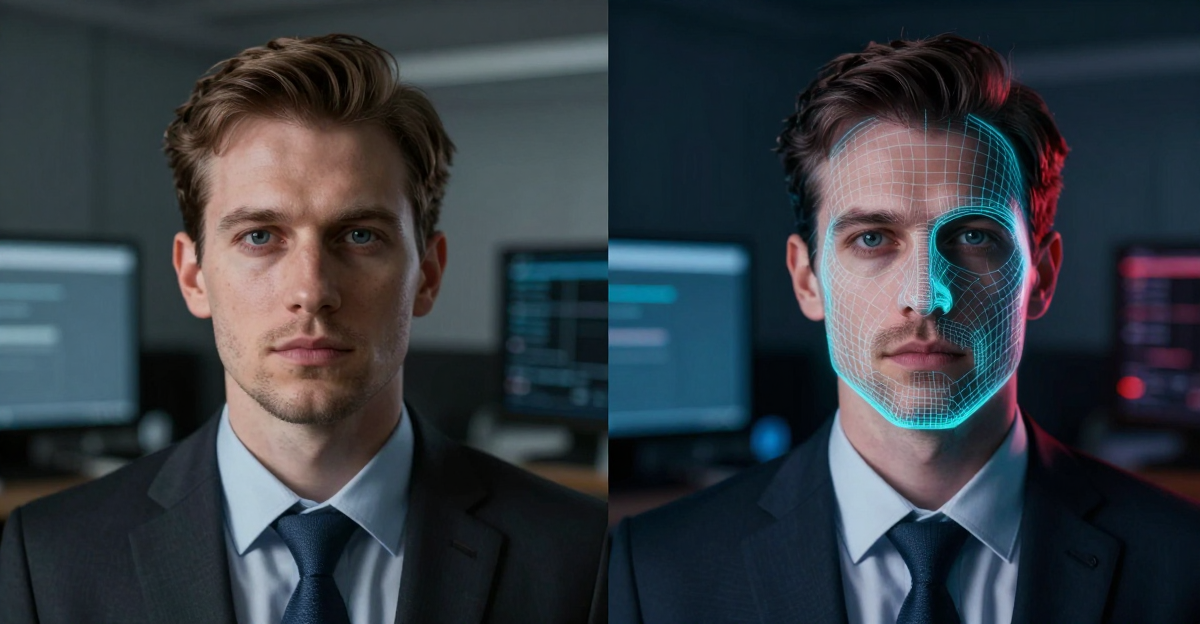
Deepfake detectors analyze facial artifacts, temporal consistency, and audio-visual synchronization to identify manipulated video. This modality combines techniques from image, audio, and video analysis.
8.1Technical Methods
Temporal Flickering Analysis — Frame-to-frame inconsistencies at face boundaries are a primary tell. The swapped face may not perfectly align with the original skin in every frame, creating subtle flickering visible when analyzed at scale.
Audio-Lip Sync Analysis — Sophisticated detectors measure the alignment between mouth movements and audio waveforms, checking whether visible mouth shapes match the phonemes being spoken.
Blinking Anomaly Detection — Early deepfakes had obvious blinking problems. Modern detectors still analyze blink frequency, duration, and naturalness as one signal among many.
Biological Signal Analysis — Intel's FakeCatcher and similar tools analyze blood flow patterns visible in facial pixels. Real faces show subtle color changes as blood flows — deepfakes lack these biological signals.
Spectral Fingerprinting — Each deepfake generation method leaves frequency-domain signatures. GAN-based, diffusion-based, and encoder-decoder approaches each have characteristic artifacts.
8.2Critical Statistics
- 8 million deepfakes shared online in 2025 — 900% growth from 2023
- $410 million lost to deepfake fraud in H1 2025
- 50% of companies experienced deepfake fraud in 2024
- Average cost: $450,000 per deepfake fraud incident
- Deepfake-as-a-Service platforms make creation accessible without technical skills
- Real-time deepfakes in video calls are the newest and hardest-to-detect threat
8.3Manual Video Tells
- Watch at 0.25x speed — Reveals flickering at face boundaries
- Check ears — Often blurry, asymmetric, or morphing between frames
- Track jewelry — Earrings and necklaces may warp or disappear
- Observe hair — Moves as a solid mass rather than individual strands
- Look at teeth — May appear as a single white block
- Check skin — Overly smooth, waxy texture without pores
Best tools: Imagera AI (99.1%), Sensity AI (95%), Reality Defender (93%)
Deep dive → Deepfake Detection in 2026: How to Spot AI-Generated Videos, Images & Audio
9.Complete Detection Tools Comparison {#tools-comparison}
9.1Multi-Modal Platforms
| Platform | Image | Text | Audio | Video | Deepfake | Pricing |
|---|---|---|---|---|---|---|
| Imagera AI | 99.7% | 98.3% | 97.4% | 96.8% | 99.1% | From $0.31/scan |
| Hive AI | 89% | — | — | — | 89% | Custom |
| Reality Defender | — | — | 85% | 78% | 93% | Enterprise |
9.2Specialized Tools by Modality
Image Detection:
| Tool | Accuracy | Pricing | Best For |
|---|---|---|---|
| Imagera AI | 99.7% | 10 credits ($0.31) | Multi-modal |
| Hive AI | 89% | Custom | Content moderation |
| Illuminarty | 85% | Freemium | Quick checks |
| AI or Not | 82% | Free/Premium | Spot verification |
Text Detection:
| Tool | Accuracy | Pricing | Best For |
|---|---|---|---|
| Originality.ai | 98% | $14.95/mo | Publishers |
| Imagera AI | 98.3% | 10 credits ($0.31) | Multi-modal |
| GPTZero | 91% | Free/$10/mo | Educators |
| Turnitin | 90% | Institutional | Universities |
| Copyleaks | 89% | Enterprise | LMS integration |
Audio Detection:
| Tool | Accuracy | Pricing | Best For |
|---|---|---|---|
| Pindrop | 99% | Enterprise | Call centers |
| Imagera AI | 97.4% | 20 credits ($0.62) | Multi-modal |
| Resemble AI Detect | 93% | API-based | Developers |
| Nuance Gatekeeper | 90%+ | Enterprise | Banking |
Deepfake Detection:
| Tool | Accuracy | Pricing | Best For |
|---|---|---|---|
| Imagera AI | 99.1% | 15 credits ($0.47) | Multi-modal |
| Sensity AI | 95% | Enterprise | Threat intelligence |
| Reality Defender | 93% | Enterprise | Real-time |
| Intel FakeCatcher | 96% | Research | Biological signals |
10.Imagera AI: The Only 5-Modality Platform {#imagera-detection}

Most detection tools specialize in one or two modalities. Imagera AI is the only platform covering all five:
| Modality | Accuracy | Cost | Generators Covered | Detection Page |
|---|---|---|---|---|
| Image | 99.7% | 10 credits (~$0.31) | Midjourney, FLUX, DALL-E, SD, Firefly | AI Image Detection |
| Text | 98.3% | 10 credits (~$0.31) | GPT-5, Claude, Gemini, DeepSeek, Llama | AI Text Detection |
| Audio | 97.4% | 20 credits (~$0.62) | ElevenLabs, Bark, Coqui, OpenAI TTS | AI Audio Detection |
| Video | 96.8% | 20 credits (~$0.62) | Sora, Veo, Runway, Kling, Pika | AI Video Detection |
| Deepfake | 99.1% | 15 credits (~$0.47) | FaceSwap, DeepFaceLab, SimSwap, HeyGen | Deepfake Detection |
10.1Why Multi-Modal Matters
Using a single-modality tool means:
- Checking images on one platform, text on another, audio on a third
- No cross-referencing between modalities
- Multiple subscriptions and billing
- No unified reporting for compliance
Imagera AI solves this with a single dashboard for all five modalities, unified credit system, and cross-modal analysis.
11.Enterprise AI Detection Strategy {#enterprise-strategy}
Enterprise deployment of AI detection requires a structured, multi-layered approach. Here's the framework used by organizations protecting against synthetic media threats:
11.1Layer 1: Prevention
Content Provenance — Implement C2PA standards to cryptographically sign all official organizational media at the point of creation. This creates an unbreakable chain of authenticity.
Watermarking — Embed invisible watermarks in all corporate videos, images, and audio. Both visible and invisible watermarks serve as authenticity markers.
Voice Biometric Enrollment — Register all authorized personnel's voiceprints with liveness detection. This creates a baseline for comparing against potential clones.
Employee Training — Educate staff on deepfake social engineering, voice cloning scams, and AI-generated phishing content. Human awareness is the first line of defense.
11.2Layer 2: Detection
API Integration — Connect Imagera AI's detection API to content management systems, email gateways, and communication platforms for automated screening.
Real-Time Monitoring — Deploy voice authentication and synthetic speech detection on all customer-facing call channels. Flag anomalous voice patterns in real-time.
Content Scanning — Auto-scan all incoming media attachments, uploaded content, and user-generated content for synthetic indicators.
Multi-Tool Validation — Use at least two detection tools for high-stakes decisions. Cross-reference results before taking action.
11.3Layer 3: Response
Incident Playbook — Pre-defined response procedures when synthetic media is detected, including escalation paths, communication templates, and preservation protocols.
Multi-Factor Verification — Never authorize high-value actions (wire transfers, access grants, data releases) based on a single communication channel. Always verify through an independent channel.
Forensic Preservation — When synthetic media is detected, preserve original files with complete metadata for potential legal and investigative use.
Reporting and Compliance — Maintain detection logs for regulatory compliance, audit trails, and trend analysis.
11.4Enterprise Deployment Timeline
| Phase | Duration | Activities |
|---|---|---|
| Assessment | 2-4 weeks | Threat modeling, risk assessment, tool evaluation |
| Pilot | 4-8 weeks | Deploy detection on highest-risk channels |
| Integration | 8-12 weeks | API integration, workflow automation, training |
| Full Deployment | Ongoing | All channels covered, continuous monitoring |
12.The Detection Arms Race {#arms-race}
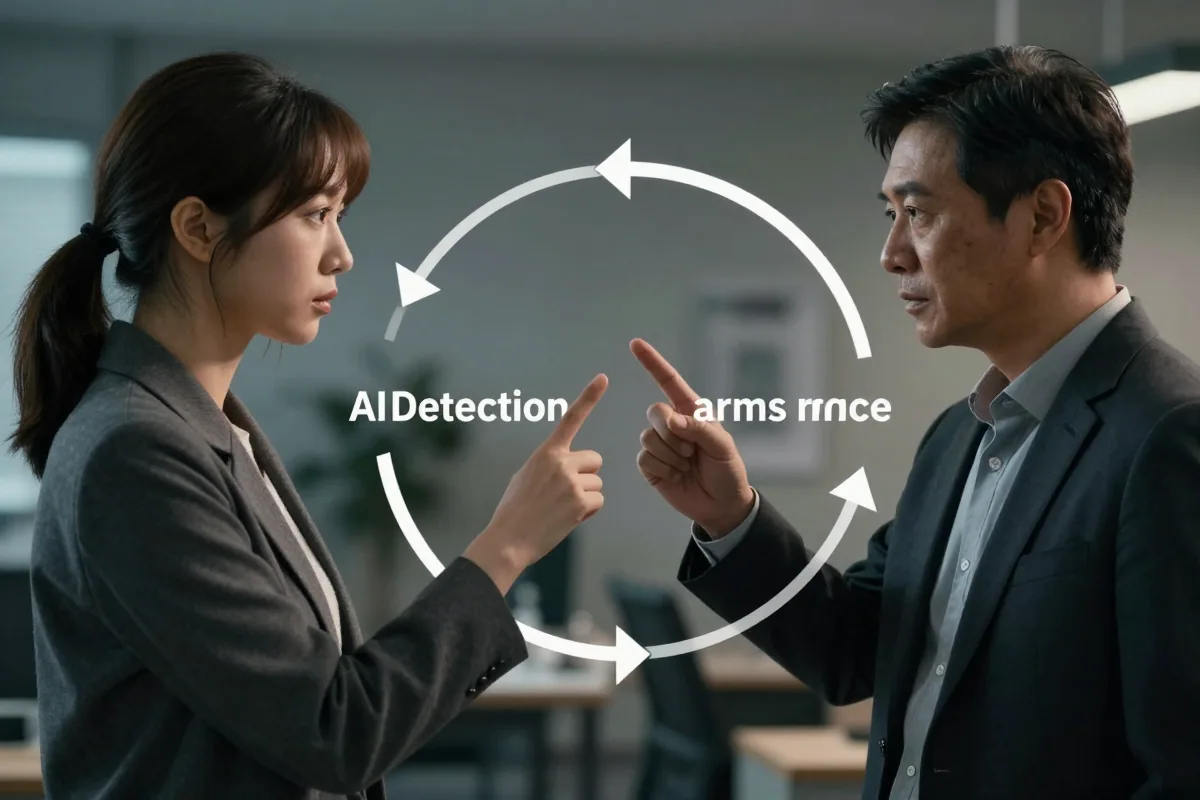
Detection is an ongoing adversarial cycle. Understanding this dynamic is essential for realistic expectations:
12.1The Cycle
- Generators improve — New models specifically train to defeat known detectors
- Detectors adapt — New detection methods emerge to catch updated generators
- Real-time synthesis — Live deepfakes reduce the artifacts detection relies on
- Post-processing — Noise injection, compression, and filters remove detection signatures
- Detectors evolve — Multi-signal approaches become harder to defeat simultaneously
12.2What This Means in Practice
- No tool achieves 100% accuracy permanently — accuracy fluctuates as generators and detectors evolve
- Layered defense is essential — multiple tools, manual inspection, and provenance verification
- Regular updates matter — detection tools must be continuously retrained against new generators
- Infrastructure solutions are the long-term answer — C2PA, Content Credentials, and blockchain provenance
12.3Emerging Detection Technologies
C2PA Content Credentials — Rather than detecting AI after the fact, C2PA proves authenticity by embedding cryptographic signatures at creation time. Backed by Adobe, Microsoft, Intel, and 200+ organizations.
Blockchain Provenance — Immutable records of when, where, and how media was created. Provides tamper-proof authenticity trails.
AI Watermarking — Google SynthID, Meta's Audio Seal, and similar technologies embed imperceptible watermarks in AI-generated content at the point of generation.
Federated Detection — Distributed detection networks where multiple tools share anonymized detection signals to improve collective accuracy without sharing raw content.
13.Limitations and Best Practices {#limitations}
13.1Known Limitations
AI content detection, despite impressive accuracy rates, has important limitations every user should understand:
False Positives — Human content flagged as AI-generated. Affects 15-20% of formulaic writing, non-native English text, and heavily edited professional content. Image detectors can false-positive on heavily filtered photographs.
False Negatives — AI content passing as human. Heavily edited AI text, post-processed AI images, and sophisticated deepfakes can evade detection. Adversarial techniques specifically designed to fool detectors exist.
Cross-Generator Variability — Detectors perform differently against different generators. A tool achieving 99% on Stable Diffusion output might only achieve 85% on a new, unknown generator.
Post-Processing Vulnerability — Heavy compression, format conversion, cropping, filtering, and other post-processing can strip the artifacts detectors rely on.
Real-Time Limitations — Live deepfake detection (video calls) achieves 70-80% accuracy compared to 95%+ for pre-recorded content.
13.2Best Practices for Reliable Detection
- Never use a single tool or single scan — Cross-reference with at least two detection methods
- Combine automated and manual inspection — Tools flag, humans verify
- Consider context — A flagged image in a news article warrants more scrutiny than a flagged social media post
- Understand confidence scores — A 55% AI probability is very different from 95%
- Stay updated — Detection tools must be current to catch new generators
- Layer your defense — Automated tools + manual tells + provenance verification + procedural safeguards
- Document everything — For legal and compliance purposes, maintain detection logs
- Train your team — Human awareness amplifies tool effectiveness
14.The Future of AI Content Detection {#future}
14.1Short-Term (2026-2027)
- C2PA adoption accelerates — Major browsers and social platforms integrate content credential verification
- Multi-modal platforms mature — More tools will offer cross-modality detection
- Real-time detection improves — Live deepfake detection in video calls will become more reliable
- Regulatory enforcement begins — EU AI Act enforcement drives mandatory detection capabilities
14.2Medium-Term (2027-2029)
- Hardware-level authentication — Camera chips that cryptographically sign images at capture
- Universal content credentials — Most digital content carries verifiable provenance
- AI-generated content labeling — Automatic, imperceptible watermarks embedded by all major AI platforms
- Detection-as-infrastructure — Built into operating systems, browsers, and communication tools
14.3Long-Term Vision
The endgame isn't better detection — it's better authentication. Content provenance standards like C2PA, combined with hardware-level signing and universal labeling, will make it possible to verify any piece of content's authenticity without relying on AI detection algorithms.
Until then, detection tools like Imagera AI provide the bridge — practical, accurate, multi-modal analysis that helps organizations and individuals navigate the current landscape.
15.Key Takeaways {#key-takeaways}
- Five modalities require five different detection approaches — no one-size-fits-all method exists
- Imagera AI is the only platform covering all five modalities in one place with accuracy from 96.8% to 99.7%
- Layered defense (automated tools + manual inspection + provenance verification) is the most reliable approach
- Enterprise deployment requires prevention, detection, and response layers working together
- C2PA and content credentials are the long-term solution, but detection tools are essential today
- No detector is 100% accurate — combine multiple tools and methods for reliable results
- The detection arms race continues — regular updates and multi-tool approaches are necessary
- See our detailed guides for deep dives into each modality (linked throughout this article)
::cta Need comprehensive AI content detection? Try Imagera AI — the only platform detecting AI images, text, audio, video, and deepfakes in one place. Accuracy rates from 96.8% to 99.7%. Start from 10 credits per scan. ::
Detailed Guides by Modality:
- Deepfake Detection Guide
- AI Text Detection: 8 Best Tools
- AI Audio & Voice Detection Guide
- AI Image Detector Comparison
- 10 Visual Signs of AI Images
- Photo Authenticity Verification Tools
- How to Spot AI-Generated Art