How Imagera AI Works
Imagera combines diffusion models, transformer architectures, and proprietary pipelines to power 50+ AI creation and detection tools — all running in the cloud so you never need a GPU.
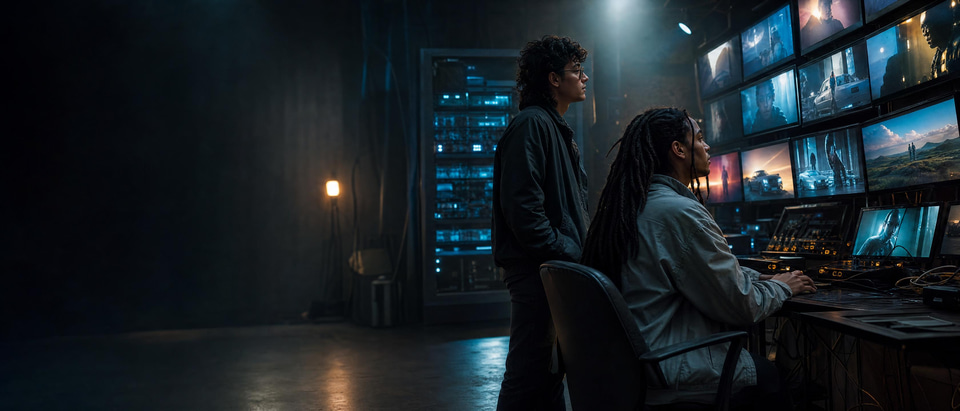 Illustration
Image Generation
Imagera generates images using diffusion model architectures enhanced with transformer-based text conditioning. The system iteratively refines noise into photorealistic output guided by your text prompt or reference image.
The pipeline supports multiple generation modes: text-to-image, image-to-image, inpainting (editing parts of an image), outpainting (extending beyond the original frame), and style transfer. Each mode is optimized for different creative workflows, from concept art to product photography.
LoRA Fine-Tuning
Pick a style from the built-in LoRA library, upload your own file or paste a link, or train your own for consistent characters, styles, and objects without retraining the full model.
Prompt Engineering
Advanced text encoder interprets complex prompts with scene composition, lighting, style, and subject directives for precise creative control.
Multiple Base Models
Choose from several optimized base architectures — each tuned for different output styles ranging from photorealism to illustration and anime.
High-Resolution Output
Native generation up to 2048px with optional AI upscaling to 4K+. Includes super-resolution, extreme detail enhancement, and skin refinement tools.
Multi-Frame Diffusion
Temporal attention layers maintain scene consistency across frames, producing smooth motion without per-frame flickering artifacts.
Frame Interpolation
AI-powered frame interpolation increases video smoothness by synthesizing intermediate frames, turning choppy clips into fluid motion.
Video Enhancement
AI upscaling to 4K with noise reduction and deblurring — restore old footage or enhance AI-generated clips to broadcast quality.
Camera & Character Control
Direct camera movement (pan, zoom, orbit) and character replacement within generated videos for cinematic storytelling control.
Video Generation
Imagera creates videos using multi-frame diffusion models with temporal attention that ensure coherent motion across every frame. The engine supports text-to-video and image-to-video generation, producing clips with natural movement and scene consistency.
Beyond generation, the video pipeline includes AI-powered frame interpolation for smoother playback, resolution enhancement up to 4K, camera movement control, face enhancement, and a full video editor with 50+ animations and AI subtitles. Every tool works together in a single production workflow.
Voice & Audio
Imagera's voice engine uses neural codec models that learn a speaker's characteristics from as little as 10 seconds of reference audio. The system captures tone, cadence, accent, and emotional nuance to produce natural-sounding cloned speech in multiple languages.
The audio suite extends beyond voice cloning to include text-to-speech with customizable voices, AI music generation with vocals and instrumentals, podcast generation with multiple AI speakers, sound effects synthesis, and voice design tools for creating entirely new voice identities.
Voice Cloning
Clone any voice from a short audio sample. The neural model reproduces speaker identity including pitch, rhythm, and emotional expression.
Music Generation
Generate complete songs with vocals and instrumentals across dozens of genres. Write custom lyrics or let AI compose — commercial license included.
Multilingual TTS
Text-to-speech in multiple languages and accents with control over speed, pitch, and emotion for voiceovers, narration, and accessibility.
Voice Design
Create entirely new voice identities by describing characteristics — age, gender, accent, tone — without needing any reference audio sample.
What Each Detector Checks
Image
Has a vision model inspect the picture for generation artifacts in light, texture, anatomy and text, and explain what it found.
Audio
Has an audio model listen for synthetic-voice and generated-music artifacts, and explain what it heard.
Text
Scores word variety, sentence rhythm and AI-typical phrasing, in your browser.
Video
Has a video model watch the whole clip for artifacts in motion, lighting and faces, and explain what it found.
Deepfake
Has a vision model inspect the face for swap seams, mismatched lighting and blending, and explain what it found.
AI Detection
Imagera's detection system uses an ensemble of specialized classifier models trained to identify statistical patterns and artifacts left by AI generators. It distinguishes AI-generated content from human-created content across five modalities: image, text, audio, video, and deepfakes.
Each modality uses a dedicated classifier architecture optimized for its input type. The ensemble approach combines multiple model outputs with confidence scoring to deliver reliable results. Detection covers outputs from all major AI generation systems, with continuous retraining to keep pace with new generation techniques.
Infrastructure
All AI processing runs on Imagera's cloud GPU clusters. Users never need to install software, own a graphics card, or manage infrastructure. Results are delivered through a global CDN for fast downloads anywhere in the world.
Cloud GPU Clusters
High-performance GPU instances scale automatically based on demand. No cold starts — inference begins immediately after request submission.
Global CDN Delivery
Generated assets are served through edge locations across 6 continents. Fast download speeds regardless of user location.
Auto-Scaling
Infrastructure scales horizontally during peak usage periods. Queue management ensures consistent generation times even under heavy load.
High Availability
Redundant systems with automatic failover keep the platform available. Real-time monitoring detects and resolves issues quickly.
Privacy & Ethics
Imagera does not train on user-uploaded content. Every generated output belongs to the user with full commercial rights. All data is encrypted in transit and at rest.
No Training on User Content
Your uploads and generated content are never used to train or fine-tune Imagera's AI models. Your creative work stays yours.
Full Commercial Rights
All outputs — images, videos, audio, and music — come with commercial licensing. Use your creations for any business or personal purpose.
Content Moderation
Automated safety filters prevent generation of harmful, illegal, or non-consensual content. Data is encrypted at rest and in transit.
How do 50+ AI tools share one technology stack?
Imagera is not a bundle of unrelated apps. A single generation core — diffusion models for pixels, temporal diffusion for motion, neural codec models for audio, and language models for planning — feeds every tool. Higher-level products such as the AI Smart Director, Cinematic Page Builder, and AI Influencer Generator add a planning layer on top of that core, then reuse the same image, video, and voice engines to produce the final result. Because everything runs on one orchestration layer, an image you upscale can flow straight into a video, a reel, or a landing page without leaving your browser.

What is the difference between diffusion models and transformers, and why does Imagera use both?
Diffusion models learn to turn random noise into a coherent image or video frame by frame, which makes them ideal for photorealistic pixels. Transformers excel at understanding sequences — the words in your prompt, the order of shots in a film, the structure of a song. Imagera pairs them: a transformer text encoder interprets your intent, then conditions a diffusion model that paints the result. This pairing is what lets a plain-English sentence become a directed image, video, or page.
| Modality | Core architecture | What it produces | Reference input |
|---|---|---|---|
| Image | Diffusion + transformer text encoder | Photorealism, illustration, product shots up to 2048px (4K+ with upscaling) | Text prompt or reference image |
| Video | Multi-frame diffusion with temporal attention | Text-to-video and image-to-video clips up to 4K | Prompt, image, or up to 9 reference images |
| Voice & music | Neural codec + generative audio models | Cloned voice, multilingual TTS, full songs with vocals | 10s of reference audio, or a text description |
| Identity (LoRA) | Low-rank adapter on a base diffusion model | A reusable, consistent face or object across unlimited images | 10–30 training photos |
| Detection | Ensemble of specialized classifiers | AI-vs-human verdict across image, text, audio, video, deepfake | Any file you want checked |
How does Imagera keep a character consistent across many images and shots?
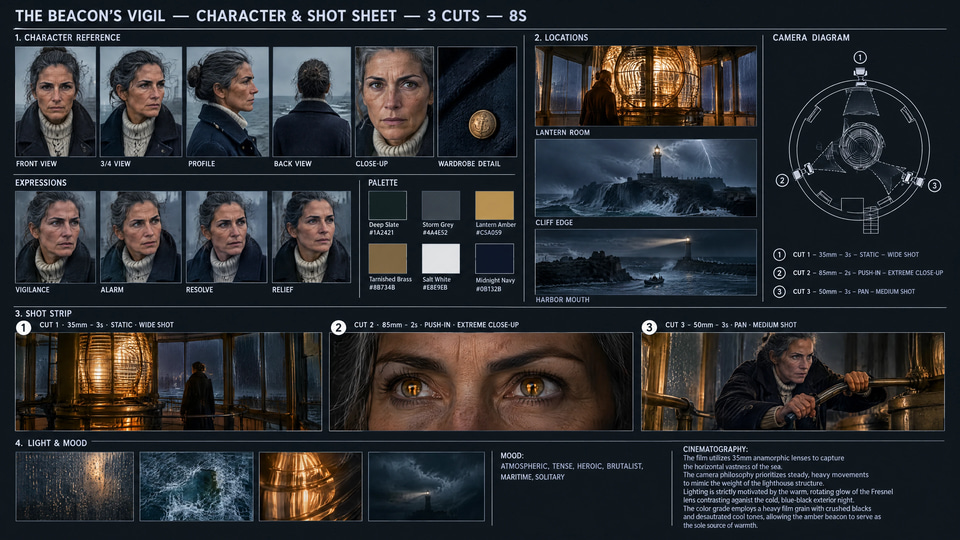
Consistency is the hardest problem in generative media, and Imagera solves it two ways. LoRA fine-tuning teaches the model one identity from a handful of photos so the same face appears in every generation — the backbone of the AI Influencer Generator. For video, the AI Smart Director renders a 4K production-bible storyboard first, then drives every cut from that single reference so characters, palette, and framing hold across shots instead of drifting between prompts.
Train an identity once, reuse forever
Upload 10–30 photos of a person, model, or mascot. Imagera trains a small LoRA adapter that locks the identity, so every future prompt — any outfit, pose, or scene — returns the same recognisable subject. Style transfer, pose control, and face swap all operate on that one trained identity.
Plan the film before rendering a frame
Rather than generating a single clip from a single prompt, the Smart Director scripts a shot list, renders a labeled storyboard sheet, then directs the whole cut as one continuous cycle. That pre-production step is why the output reads as deliberate cinematography, not a random five-second clip.
Who owns the output, and how does pricing work?
You own every image, video, voice track, and song you generate, with full commercial rights included — use them in ads, client work, product listings, or your own store. Imagera never trains its models on your uploads or outputs. Pricing is credit-based rather than a flat monthly fee: each action shows its credit cost before you run it, credit packs start at 350 credits for $39.99, top-up credits never expire, and failed renders are refunded automatically so you only pay for work that completes.
Credits, not surprises
The exact credit cost appears on every Generate button. An optional Starter subscription from $19.99/mo lowers the per-credit rate for heavy users, while pay-as-you-go top-ups suit occasional projects.
Automatic fallback chains
If one generation provider is busy or declines a request, Imagera routes the job to the next model in the chain so it still completes. You get the best available engine for each task without picking a model yourself.
Encrypted and private
Uploads and outputs live in your private storage, encrypted in transit and at rest. Automated moderation blocks harmful or non-consensual generation, and you can delete any asset from your history at any time.
Why can Imagera run heavy AI models on a phone with no download?
None of the AI runs on your device. When you press Generate, the request goes to Imagera's cloud GPU clusters, the model runs there, and only the finished file streams back through a global CDN. Your phone or laptop never loads model weights, never spins up a graphics card, and never installs software — it just sends a prompt and receives a result. That is why the same experience works identically on an iPhone, an Android tablet, and a desktop, and why you can start a render on one device and download it on another.
No cold starts
GPU instances scale automatically with demand, so inference begins as soon as your request lands rather than waiting for a machine to warm up.
Queue management
During peak periods the platform scales horizontally and manages the queue so generation times stay consistent even under heavy load.
Edge delivery
Finished assets are served from edge locations across six continents, so downloads are fast wherever you and your audience are.
What actually happens between pressing Generate and getting a file?
Every Imagera render follows the same journey, whether you are making a single image or a multi-shot film. First, your prompt and any reference files are validated and moderated in the browser before anything leaves your device. Imagera then reads the credit cost for that specific action — resolution, duration, and mode all change the price — and reserves it, so the number you saw on the Generate button is the number you pay. From there the job is queued and routed to the engine best suited to the task rather than a one-size-fits-all model.
Once an engine picks up the job, a transformer text encoder turns your words into the conditioning signal that steers a diffusion pass, and the result is post-processed — upscaled, denoised, or thumbnailed — before it lands in your private storage. If the first engine is busy or declines the request, the job moves to the next choice in the fallback chain instead of failing, and only work that finishes is billed. This is why a prompt behaves predictably: the same six stages run for a portrait, a reel, or a landing page, and the differences you feel between tools come from the planning layer stacked on top, not from a different pipeline underneath.
Validate and reserve
Prompt and references are checked and moderated, then the exact credit cost for your settings is reserved up front — no surprise charges after the fact.
Encode and render
A transformer reads your intent and conditions a diffusion pass on cloud GPUs, then the output is upscaled or denoised before delivery to your private storage.
Fall back, then bill
If an engine is busy or declines, the job routes to the next choice in the chain. Only a completed render draws credits; failed attempts are refunded automatically.
What can you build with Imagera's technology stack?
The same generation core powers more than 50 tools, so a single account moves from a raw photo to a finished campaign without switching software. Below are the flagship workflows and the underlying technology each one leans on — every step runs in the browser on cloud GPUs, and every output belongs to you with commercial rights.
Photos to a consistent virtual creator
LoRA fine-tuning locks one identity from 10–30 photos, then the diffusion engine reproduces that face in any scene. This is the technology behind the AI Influencer Generator, where the same recognisable creator posts across an entire feed.
One sentence to a multi-shot film
A language model scripts a shot list, a 4K storyboard sheet is rendered, then multi-frame diffusion directs a multi-shot cut. The AI Smart Director chains all three stages so the film reads as directed, not random.
A brief to a cinematic landing page
Language, image, and video models combine to write layout and copy, generate on-brand imagery, and produce a scroll-scrub hero. The Cinematic Page Builder exports the result as clean, self-contained HTML.
A voice sample to narrated audio
Neural codec models clone a voice from 10 seconds of audio, drive multilingual text-to-speech, and generate full songs with vocals. Voiceover, podcast, and music tools all draw on the same audio core.
A low-res clip to broadcast 4K
Super-resolution and frame-interpolation models upscale images and video, reduce noise, and smooth choppy footage — useful for both restoring old media and finishing AI-generated clips at higher resolution.
Any file to an AI-vs-human verdict
An ensemble of specialised classifiers checks images, text, audio, video, and deepfakes, combining model outputs with confidence scoring. Detection is retrained continuously to keep pace with new generation techniques.
Because these tools share one orchestration layer, outputs flow between them: a face trained once can appear in a reel, a Smart Director film, and a cinematic page without ever leaving your browser or re-uploading a thing.
Frequently Asked Questions
Imagera uses advanced diffusion model architectures combined with transformer-based conditioning. Our pipeline supports text-to-image, image-to-image, inpainting, outpainting, and style transfer — all running on cloud GPUs so users never need local hardware.
Imagera's video generation engine uses multi-frame diffusion models with temporal attention layers to produce coherent motion across frames. The pipeline supports text-to-video, image-to-video, frame interpolation, and video enhancement up to 4K resolution.
Imagera's voice synthesis system uses neural codec models that learn speaker characteristics from as little as 10 seconds of reference audio. The model captures tone, cadence, accent, and speech patterns to produce natural-sounding cloned speech in multiple languages.
No. Imagera does not use any user-uploaded content to train or fine-tune its AI models. All generated outputs belong to the user with full commercial rights. Your creative work and personal data remain yours.
No. All AI processing runs on Imagera's cloud infrastructure. The platform is entirely browser-based — any modern device with an internet connection can generate images, videos, voices, and music without installing software or owning a GPU.
Imagera's detection covers five modalities — image, text, audio, video and deepfake — and each scan reports an AI probability from 0 to 100%, a confidence figure and a label, with the signals behind them. Image, audio and deepfake checks combine several classifiers with signal measurements, video scores sampled frames and motion, and text is scored in your browser. Imagera does not publish an accuracy percentage for its detectors, because it has not run a benchmark that could support one.
LoRA (Low-Rank Adaptation) is a technique that teaches a diffusion model one specific identity, style, or object without retraining the entire model. You upload 10–30 reference photos, Imagera trains a small adapter, and the base model then reproduces that subject consistently across unlimited new prompts. It is how the AI Influencer Generator keeps the same face across every post, and it is far cheaper and faster than fine-tuning a full model. For instant styles, Imagera also has a built-in LoRA style library, and takes your own uploads and links.
Both tools layer a planning stage on top of the raw generation models. The AI Smart Director runs a three-stage pipeline — a language model scripts a shot list, a 4K storyboard sheet is rendered, then a multi-shot reference-to-video render directs the film. The Cinematic Page Builder combines a language model that writes layout and copy with the image and video engines that produce a scroll-scrub hero and on-brand imagery. In both cases the extra planning step is what makes the output feel directed rather than random.
Imagera orchestrates a rotating set of frontier open and commercial models across image, video, voice, music, and language, with automatic fallback chains so a job still completes if one provider is busy or refuses. Because the stack is model-agnostic and updated continuously, Imagera brands the experience rather than any single third-party model — you get the best available engine for each task without having to pick one yourself.
Every action is priced in Imagera credits, and the credit cost is shown on each Generate button before you click. Credit packs start at 350 credits for $39.99, top-up credits never expire, and an optional Pro subscription lowers the per-credit rate. Failed renders are refunded automatically, so you only pay for work that actually completes — no monthly waste on models you did not use.
Yes. The entire platform runs in the browser on cloud GPUs, so an iPhone, Android phone, tablet, or laptop can generate images, videos, voices, and full films with no app install and no local hardware. Uploads and outputs sync to your private Imagera storage, and you can start a render on one device and download it on another.
See it in action


Experience the Technology
See how Imagera's AI technology translates into professional-quality images, videos, voices, and music. Start creating in your browser — no GPU, no downloads, no setup.