You can complete this on Imagera without installing software: upload a real source file, describe the change, confirm credits up front, generate, and review before you publish. AI Text Detection: 8 Best Tools to Catch ChatGPT — this guide covers the steps, quality checks, and when to open related tools.
51% of marketers now use AI writing tools. Whether you're an educator checking student submissions, an editor verifying content authenticity, or a business protecting brand voice — knowing how to detect AI-generated text has become a core skill.
But AI text detection isn't straightforward. False positives flag human writing as AI. Heavily edited AI text slips through. And the line between "AI-written" and "AI-assisted" gets blurrier every month.
This guide covers how AI text detection works, which tools perform best, and how to build a reliable detection workflow.
::key-takeaway TL;DR: AI text detectors identify machine-generated writing by analyzing perplexity, burstiness, and stylistic patterns. Imagera AI offers multi-modal detection (text, image, and audio in one place), while Originality.ai and GPTZero are popular text-only options. No detector is 100% reliable — combine tools with editorial judgment for best results. ::
Quick answer: AI text detectors estimate whether writing was machine-generated by scoring statistical patterns like perplexity and burstiness; the 8 best 2026 tools flag ChatGPT-style text with useful but imperfect accuracy, so treat results as signals, not proof.
How accurate are AI text detectors at catching ChatGPT in 2026?
The 8 tools we compared vary in how confidently they score a given sample, and most return a percentage result in seconds. Accuracy generally improves on longer passages over 300 words and gets shakier on short snippets under 100 words, where a single detector can easily flip its verdict. Run 2 or 3 tools before deciding, and weigh the scores together rather than trusting any one number.
Why do AI detectors flag human writing as AI-generated?
False positives happen because detectors reward low perplexity, so simple, formulaic, or non-native English writing can score like a machine. This matters most in high-stakes settings like graded student essays, where a wrong flag has real consequences. That is why Imagera recommends pairing detection with human review rather than automatic penalties, and never treating a score as final proof on its own.
How AI Text Detection Works {#how-it-works}
AI text detectors analyze writing using several statistical methods:
Perplexity Analysis
Perplexity measures how predictable the next word in a sentence is. AI-generated text tends to choose the most statistically likely next word, resulting in low perplexity — smooth, predictable prose. Human writing is messier and less predictable, resulting in higher perplexity.
Think of it this way: if you can easily predict the next word in a sentence, it's probably AI-generated. Humans take unexpected turns; AI optimizes for coherence.
Burstiness Analysis
Burstiness measures variation in sentence structure. Humans write with natural variation — short sentences followed by long ones, fragments mixed with complex constructions, sudden topic shifts. AI text tends to maintain consistent sentence length and structure throughout, producing low burstiness.
Stylistic Fingerprinting
Different AI models have characteristic writing patterns:
- ChatGPT — Tends toward formal, balanced paragraphs with predictable transitions ("Furthermore," "In addition," "It's worth noting")
- Claude — More cautious phrasing, frequent qualifiers ("however," "it's important to note"), longer explanatory passages
- Gemini — Structured lists, concise summaries, reference-heavy
- Llama — Variable quality, more repetitive at lower parameter counts
Detectors trained on output from each model can identify which AI generated a specific text.
Classifier Models
Modern detectors use transformer-based classifiers trained on millions of paired human/AI text samples. These models learn the subtle statistical differences between human and machine writing — differences invisible to human readers but measurable by algorithms.
The 8 Best AI Text Detection Tools {#best-tools}
1. Imagera AI Text Detection
Best for: Multi-modal detection (text + image + audio in one platform)
Imagera AI's text detector checks AI-generated writing across ChatGPT, Claude, Gemini, and Llama. Part of the broader detection suite that also covers images, audio, video, and deepfakes.
| Feature | Detail |
|---|---|
| Coverage | ChatGPT, Claude, Gemini, Llama, Mistral |
| Best on | Unedited AI text (like all detectors) |
| Pricing | the current quote shown before scanning |
| Speed | Results in 2-5 seconds |
| Extras | Multi-modal — check text, images, and audio in one place |
Try Imagera AI Text Detection →
2. Originality.ai
Best for: Publishers and content agencies needing maximum accuracy
Originality.ai reports 98% AI detection accuracy for its Lite model. Offers team management, scan history, and API access for automated workflows.
| Feature | Detail |
|---|---|
| Accuracy | 98% (Lite model, vendor-reported) |
| Pricing | $14.95/month (50 credits) |
| API | Yes |
| Extras | Team management, plagiarism detection combo |
3. GPTZero
Best for: Educators and academic integrity
GPTZero was purpose-built for education. It provides sentence-by-sentence highlighting showing which portions are likely AI-generated, making it useful for writing feedback rather than binary verdicts. Adopted by over 4 million educators.
| Feature | Detail |
|---|---|
| Accuracy | 91% |
| Pricing | Free tier + $10/month Pro |
| Extras | Sentence-level highlighting, batch scanning |
4. Copyleaks
Best for: Enterprise and LMS integration
Enterprise-focused detector with integrations into Moodle, Canvas, Blackboard, and other learning management systems. Supports 30+ languages and provides AI detection alongside plagiarism detection.
| Feature | Detail |
|---|---|
| Accuracy | 89% |
| Pricing | Custom enterprise pricing |
| Languages | 30+ |
| Extras | LMS integration, API, team features |
5. Sapling AI Detector
Best for: Quick, free spot-checks
Free browser-based tool that provides instant AI probability scores. Best for quick verification rather than comprehensive analysis. No account required.
| Feature | Detail |
|---|---|
| Accuracy | 82% |
| Pricing | Free |
| Extras | No account needed, instant results |
6. ZeroGPT
Best for: Free detection with decent accuracy
Free AI text detector with a simple paste-and-check interface. Provides percentage-based AI probability and highlights suspected AI portions. Quality has improved significantly in 2026.
| Feature | Detail |
|---|---|
| Accuracy | 85% |
| Pricing | Free (with limits) |
| Extras | Percentage scoring, highlighted sections |
7. Turnitin AI Detection
Best for: Academic institutions already using Turnitin
Turnitin added AI detection to their existing plagiarism detection platform. Available to institutional subscribers. Integrated into existing grading and feedback workflows most universities already use.
| Feature | Detail |
|---|---|
| Accuracy | 90% |
| Pricing | Institutional license |
| Extras | Integrated with Turnitin plagiarism platform |
8. QuillBot AI Detector
Best for: Students and individual writers
QuillBot's AI detector launched mid-2024 and has improved steadily. Achieves ~80% accuracy and is free to use. Useful for writers who want to check if their own AI-assisted drafts "read" as AI-generated before publishing.
| Feature | Detail |
|---|---|
| Accuracy | 80% |
| Pricing | Free |
| Extras | Integrated with QuillBot paraphrasing suite |
::key-takeaway How to choose: Imagera AI stands out for multi-modal coverage (text, image, and audio in one place). Originality.ai and GPTZero are popular text-only picks, with Turnitin and Copyleaks common in academic and enterprise settings. Vendor-reported accuracy varies by AI model and editing level, so treat any single figure as approximate. ::
AI Text Detection Accuracy by Model {#accuracy-by-model}
Detection accuracy varies significantly depending on which AI model generated the text. The general pattern across detectors looks like this (relative difficulty, not vendor benchmarks):
| AI Model | Relative Detection Difficulty |
|---|---|
| ChatGPT (GPT-4o) | Easiest — well-characterized patterns |
| GPT-5 | Moderate |
| Claude Opus 4 | Harder — more human-like phrasing |
| Gemini 3 Pro | Moderate |
| DeepSeek V3 | Harder |
| Llama 4 | Moderate |
| Mistral Large | Harder |
| Heavily edited AI | Hardest — human editing hides the signal |
Key Takeaways from Detection Patterns
- Unedited ChatGPT output is the easiest to detect across all tools — its writing patterns are the most well-characterized
- Claude-generated text is harder to detect due to its more cautious, human-like writing style
- Heavily edited AI text drops detection rates sharply across all tools — human editing introduces the natural variation detectors look for
- Mixed human/AI content (AI draft with significant human editing) is the hardest category
- Newer models (GPT-5, Gemini 3) are generally harder to detect than older ones as they generate more human-like text
Common AI Writing Patterns to Recognize {#ai-writing-patterns}
Even without detection tools, these patterns can help you identify AI-generated text:
Structural Patterns
- Perfectly balanced paragraphs — AI tends to produce paragraphs of similar length, unlike natural human variation
- Predictable transitions — "Furthermore," "Additionally," "It's worth noting," "In conclusion" appear at regular intervals
- List affinity — AI loves bullet points and numbered lists, often converting prose into structured lists unnecessarily
- Symmetrical arguments — Equal weight given to all points, unlike human writing which naturally emphasizes what the author cares about
Vocabulary Patterns
- Hedge words — "It's important to note," "It should be mentioned," "One could argue"
- Superlative avoidance — AI tends to qualify everything, rarely making bold absolute claims
- Generic examples — AI uses common, well-known examples rather than obscure or personal ones
- Consistent register — The formality level stays uniform throughout, while human writing naturally shifts
Content Patterns
- Lack of personal anecdotes — AI can't draw from genuine experience
- Surface-level analysis — Covers breadth but lacks the depth that comes from domain expertise
- Missing citations — When citations appear, they may be fabricated or inaccurate (hallucinations)
- Balanced to a fault — AI presents "both sides" even when consensus clearly favors one position
Model-Specific Tells
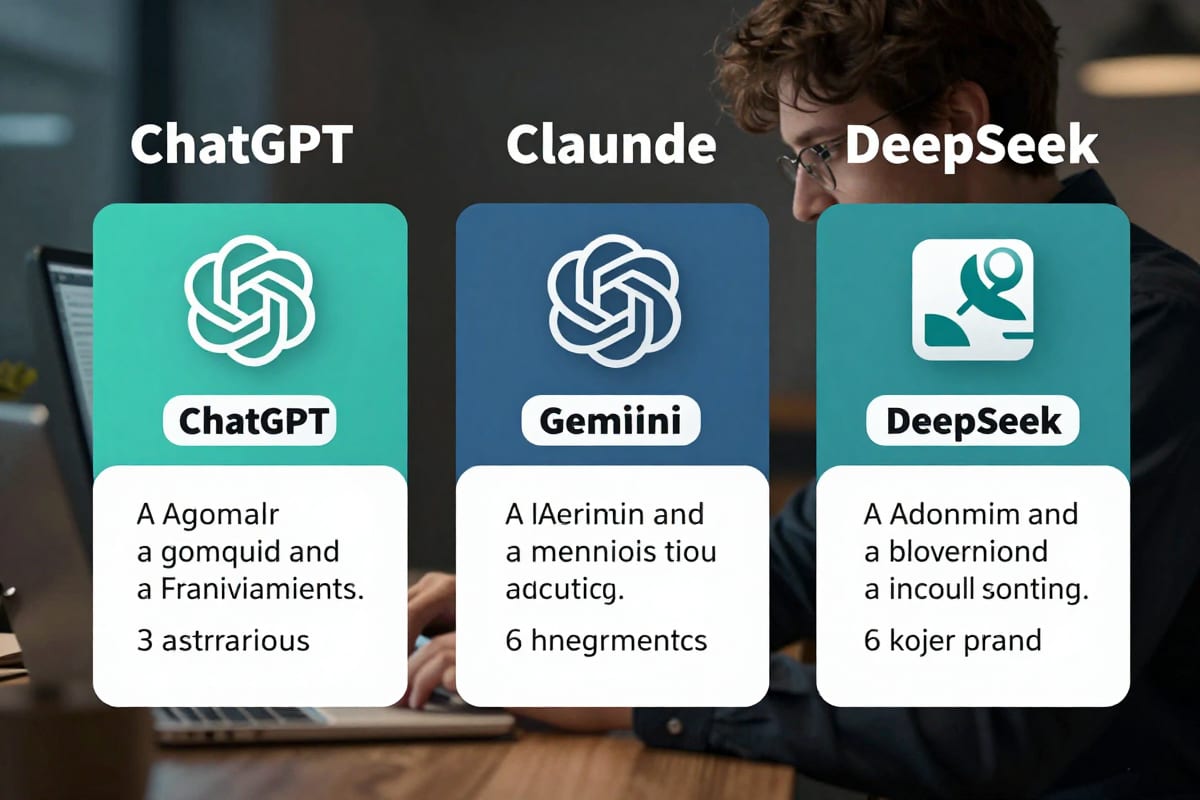
ChatGPT loves: "delve into," "it's worth noting," "in the realm of," "a testament to," "navigate the landscape"
Claude loves: "I should note," "it's important to consider," "there are some nuances," "I'd recommend," "that said"
Gemini loves: structured headers, bullet-heavy responses, "here's a breakdown," "key takeaways"
DeepSeek loves: technical precision, occasional awkward phrasing, reference-heavy prose
Recognizing these patterns gives you an additional manual detection layer alongside automated tools like Imagera AI.
The False Positive Problem {#false-positives}
AI text detectors have a known weakness: false positives. Human-written text gets flagged as AI-generated 15-20% of the time, particularly:
- Formulaic writing — Academic papers, legal documents, and technical manuals follow predictable structures that mimic AI patterns
- Non-native English speakers — Simpler vocabulary and sentence structures trigger AI classifiers
- Well-edited content — Heavily polished writing reduces the "messiness" that signals human authorship
- Template-based content — Press releases, product descriptions, and boilerplate text
This is why no AI text detector should be used as the sole basis for accusing someone of using AI. The tools are probabilistic — they estimate likelihood, not prove origin.
Best Practice: The 3-Tool Rule
For reliable detection:
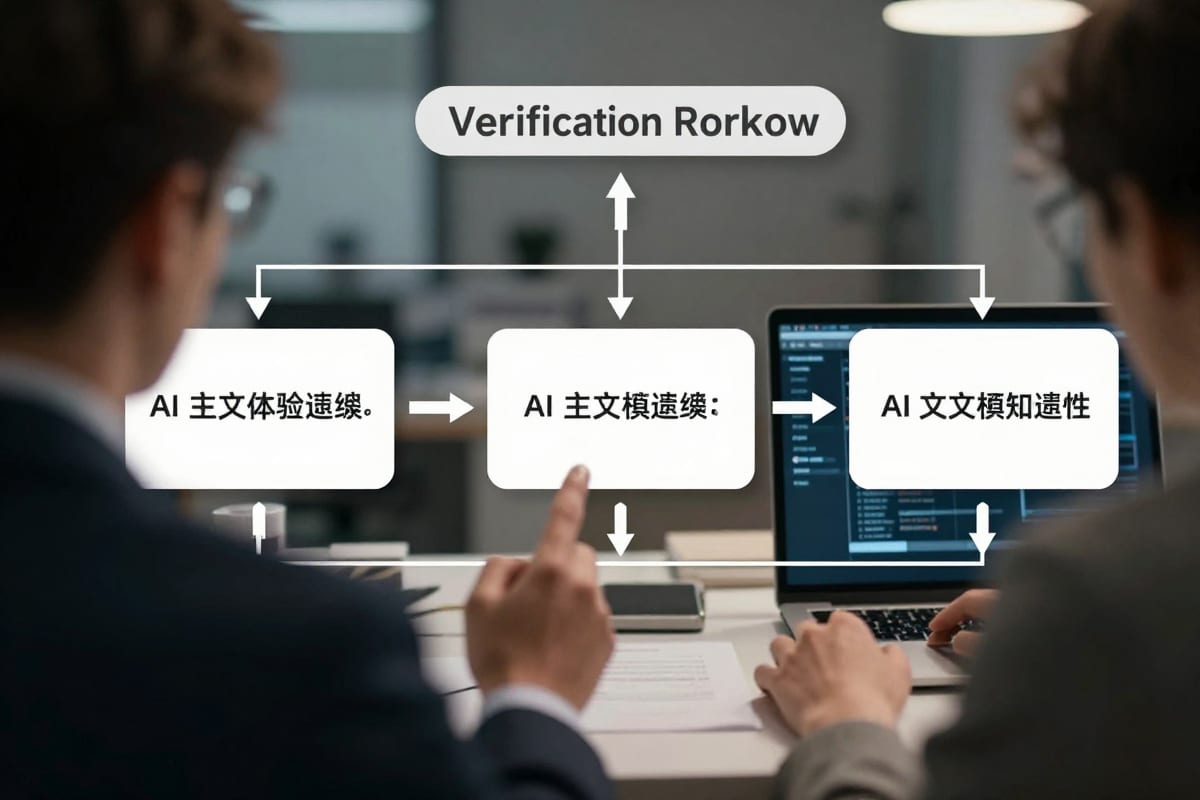
- Run text through at least two detectors — If both flag it, confidence increases
- Check sentence-level highlights — Look at which specific passages are flagged
- Apply editorial judgment — Does the writing lack specific examples, personal voice, or subject expertise?
Google and AI-Generated Content {#google-stance}
A common question: does Google penalize AI-generated content?
No. Google's official guidance states:
"Using AI doesn't give content any special gains. It's just content. If it is useful, helpful, original, and satisfies aspects of E-E-A-T, it might do well in Search. If it doesn't, it might not."
Google targets low-quality, unhelpful content regardless of whether a human or AI wrote it. AI content that provides genuine value, includes original insights, and demonstrates expertise can rank well.
The risk comes from mass-produced thin content without E-E-A-T signals — not from thoughtful AI-assisted writing.
How to Use AI Text Detection Effectively {#effective-usage}
For Educators
- Use as a conversation starter, not a verdict — Detection results open dialogue about academic integrity
- Focus on the writing process — Ask for outlines, drafts, and revisions to verify understanding
- Set clear AI policies — Define what AI assistance is acceptable vs prohibited
- Combine with oral assessment — Ask students to explain their writing choices
For Publishers & Editors
- Scan all submissions with Imagera AI or Originality.ai
- Verify flagged content with a second tool
- Check for specific tells — Generic examples, lack of personal anecdotes, perfectly balanced paragraphs
- Require author confirmation — Include AI disclosure in contributor agreements
For Businesses
- Protect brand voice — AI text can sound generic; detection helps maintain authenticity
- Verify contractor work — Ensure paid content creation involves genuine human expertise
- Compliance documentation — Some industries require disclosure of AI-generated content
- Quality assurance — Flag content that needs human enrichment before publication
Key Takeaways {#key-takeaways}
- AI text detectors work by analyzing perplexity, burstiness, and stylistic patterns — not by recognizing specific AI outputs
- Imagera AI offers multi-modal detection (text, image, and audio in one place); Originality.ai and GPTZero are popular text-only options
- False positives affect 15-20% of formulaic human writing — never use a single detector as definitive proof
- Google doesn't penalize AI content that demonstrates genuine E-E-A-T value
- Multi-modal detection via Imagera AI lets you check text, images, audio, and video in one platform
- The 3-tool rule: Use two detectors plus editorial judgment for reliable results
Conclusion {#conclusion}
AI text detection in 2026 is a necessary but imperfect science. The best tools achieve 90-98% accuracy, but no detector is infallible. The winning strategy combines automated detection with human judgment — use tools to flag suspicious content, then apply critical thinking to make final determinations.
::cta Need to check text for AI? Try Imagera AI's text detector — covers ChatGPT, Claude, Gemini, and more. Scan text, images, audio, and deepfakes in one platform. Review the quote before scanning. ::
Related Articles:
- Deepfake Detection Guide: How to Spot AI-Generated Videos, Images & Audio
- AI Image Detector Accuracy: 5 Tools Compared
- 10 Visual Signs an Image Was Made by AI
- Photo Authenticity Verification Tools