TL;DR ByteDance launched Seedance 2.5 on July 31, 2026: 30-second clips generated in one pass, native 4K, and reference sets of up to 50 assets. What did not launch with it is a price. There is no published per-second rate, the Ark API listing is still pending, the live consumer channels want a mainland Chinese phone number, and no US timeline has been given. Two things follow for anyone with a deadline. First, budget for long clips honestly: a 30-second take costs six times a five-second one on any per-second platform, and you pay the same for the attempts that miss as the ones that land — so retries, not resolution, decide the bill. Second, stop shopping on per-second rates: the render is the cheapest part of a finished clip, and the vendors you would assemble around it are where the budget actually goes. If the shot is due this week, produce it somewhere that already holds the whole chain — Imagera's video generator runs in the browser on pay-as-you-go credits that never expire, with the cost of every step shown on the button before you commit. Seedance 2.5 support is coming soon to Imagera, so the same balance reaches it the day the API opens: no separate account, no mainland phone number, no reseller prepayment.
1.What ByteDance actually shipped on July 31
Seedance 2.5 was announced at Volcano Engine's conference on June 23 and rolled out at the end of July. The headline is duration: the model generates a 30-second high-quality clip in a single run and supports multi-turn extension for longer sequences, instead of stitching several short generations together and hoping the character survives the cut.
| Capability | Seedance 2.0 | Seedance 2.5 |
|---|---|---|
| Single-pass clip length | ~12 seconds | 30 seconds, extendable in multiple turns |
| Reference inputs | 12 | Up to 50 — around 30 images, 10 videos, 10 audio clips |
| Resolution | Up to 1080p | Native 4K with 10-bit colour |
| Audio | Generated separately, synced after | Co-processed in the same latent space as the visuals |
| Editing | Full re-render | Region-level edits on part of a frame |
| Pre-visualisation | None | 3D white-box preview before a full render |
Three of those lines matter more than the rest. Native 4K with 10-bit colour depth means gradients survive a grade instead of banding the moment a colourist touches them. The audio change is the one people underrate:
"Audio is now co-processed within the same latent space as visual signals, producing native synchronisation between onscreen actions and their corresponding sound effects." — The Next Web, on Seedance 2.5
In practice that means footsteps land on the frame where the foot lands, rather than being nudged into place in an edit. And ByteDance claims roughly 20 percent better prompt adherence than the previous version — a modest-sounding number that, as the cost maths below shows, is worth more than any discount.
2.Can you actually use Seedance 2.5 today?
This is where the launch gets awkward. The model is live, but the doors that are open are not the doors most teams walk through.
| Channel | Status on July 31, 2026 | What it needs |
|---|---|---|
| Jimeng AI (web + app) | Live | A mainland Chinese phone number and real-name verification; payment via Alipay or WeChat Pay |
| Doubao Pro | Live | The Chinese ByteDance app, same account requirements |
| Volcano Engine Ark API | Pending — expected shortly after launch | A Volcano Engine account; the model card and rates publish together |
| BytePlus ModelArk (international) | Announced, not open | Nothing to sign up for yet |
| United States availability | No timeline given | — |
| Third-party API resellers | Advertising "day one" access | Their own prepaid balance, on unconfirmed rates |
| Imagera | Coming soon — support planned once the API opens | An existing credit balance; nothing region-locked |
On the question everyone outside China is actually asking, the reporting is blunt:
"No timeline has been offered for making the new model available in the United States." — The Next Web
The reseller row deserves a warning rather than a recommendation. Several API marketplaces are already selling Seedance 2.5 access pages and waitlists while ByteDance has published neither an endpoint nor a price. Prepaying a middleman for capacity that does not exist yet is how teams end up with a balance they cannot spend. Wait for the Ark model card, or for a provider to show you a successful generation ID, before moving money.
For a straight capability rundown of the model itself, the companion piece — Seedance 2.5 explained — covers the architecture and feature set without the procurement angle.
3.What will Seedance 2.5 cost?
Officially: nothing has been published. ByteDance released no per-second rate alongside the launch, and until the Ark model card appears, every figure circulating is an extrapolation from the previous version — including the confident-looking ones on API marketplace pages.
The more useful answer is that the per-second rate was never the number that decided your bill. It is the smallest line on the invoice for a finished deliverable, and shopping on it is how teams end up over budget with nothing delivered.
Here is what one finished 30-second piece actually requires, and where each part comes from.
| What shipping one finished clip requires | Buying model access direct | Working in Imagera |
|---|---|---|
| Getting to the model | API key, cloud account, region-eligible billing, quota approval | Sign in and generate |
| Knowing the cost before you run it | Metered after the fact, per second | The exact credit cost sits on the generate button |
| Takes that miss the brief | Billed the same as takes that land | Same charge, but you saw the number before committing, and blocking passes cost less than finals |
| Getting to delivery resolution | A separate upscaler, separately billed | In the same workspace |
| Lip-sync, camera moves, restyling, cutdowns | A different vendor and invoice for each | All in the same workspace, one balance |
| Wiring it into your pipeline | Engineering time, per vendor, repeated at every model change | None — the newest models arrive already integrated |
| Budget you did not spend | Burns down with the platform's terms | Add-on credits never expire |
| Where you can use it | Varies by vendor; some are region-locked | Any browser, anywhere |

Two consequences worth internalising before the Ark rates land.
Length is the expensive variable, not resolution. Every per-second platform priced itself when clips were five seconds long. A 30-second take costs six times a five-second take at the same rate — before you know whether the model understood the brief. Block the shot short, prove the composition, and only spend on the long version once it is right. Seedance 2.5's 3D white-box preview exists for exactly that reason.
Prompt adherence beats any discount. That claimed 20 percent improvement is the most commercially interesting line in the whole launch: if a shot that used to take four attempts now takes three, you cut a quarter off the cost of every revision a client asks for. No per-second discount on the market moves the number that much.
4."Isn't a creative studio just a wrapper on the same models?"
It is a fair question and it deserves a straight answer, because it is the one every buyer asks.
What you pay a studio for is not the inference. It is everything the inference cannot do on its own: the account you do not have to provision, the price you see before you commit rather than after, the upscaler and the lip-sync and the reel cutter sitting in the same place on the same balance, and the fact that when a model like Seedance 2.5 opens up, it arrives already wired in rather than as a two-week integration ticket on your engineers.
The wrapper framing assumes the model is the product. For anyone shipping client work, the model is one component in a chain of six, and the chain is where the deadlines are lost. Buying raw access to the best generator in the world still leaves you assembling the other five, paying for them separately, and rebuilding the whole thing the next time the frontier moves — which, on the evidence of this July alone, is roughly monthly.
That is also the honest case for waiting rather than panic-buying reseller credits: Imagera keeps the newest models curated and current so you do not have to track them, and your balance moves with you when they change.
5.Is a 30-second single-pass clip actually worth waiting for?
Sometimes. Be honest about which side of the line your work sits on.
The reason this is a headline at all is that generated clips have historically fallen apart somewhere past the eight-second mark — a limit worth understanding before you pay for length, and one we broke down in why AI clips break after 8 seconds.
Thirty seconds in one pass genuinely changes three jobs: an unbroken product demo where the object has to stay the same object; a narrative beat that would look wrong with a cut in the middle; and any piece where a character has to hold their face, wardrobe and lighting for longer than a hook. Stitching those from five-second fragments is where AI video usually falls apart — the identity drifts, the light shifts, and no amount of colour work hides it.
It changes almost nothing for the work most teams ship weekly. Social ads cut every two to three seconds by design. A TikTok hook lives or dies in the first eight frames. Product reels are cut sequences, not takes. If your timeline is a series of short shots, a 30-second generator is an expensive way to render footage you were going to slice anyway — and you inherit the retry cost of a long take to get it.
The useful reframing: Seedance 2.5's advantage is continuity, and continuity is only worth paying for when a cut would be visible. Everything else is shot production, and shot production is a volume game — cheap iterations, fast turnaround, tight feedback loop.
6.What do 50 reference inputs actually buy you?
The reference jump — from 12 assets to roughly 30 images, 10 videos and 10 audio clips — is the quieter half of this release, and for brand work it may matter more than the duration.
A reference set that size stops being "here is a picture of my character" and starts being a small style bible: the face from five angles, the product on three surfaces, the wardrobe, two lighting setups, a motion reference clip for how the camera should move, and the voice. Feed that in and consistency stops depending on prompt wording, which is the single most fragile part of AI video.

If you are preparing for the API to open, build that set now — it is portable, and it is the part of the work no model does for you:
- Identity, five angles. Front, three-quarter both sides, profile, and one at an unflattering angle so the model learns the face, not the pose.
- Product on neutral and in context. Two shots each, matched exposure.
- A motion reference. Ten seconds of the camera move you want, even shot on a phone.
- A lighting plate. One frame that defines key, fill and colour temperature.
- Audio. A clean voice sample and a room tone, since audio is now generated with the picture rather than after it.
Every one of those assets is worth cleaning up before it goes anywhere near a generator. A soft or noisy reference teaches the model softness and noise — running stills through an upscaler first, or footage through Imagera's video enhancer, costs a fraction of a single long render and improves everything downstream.
7.How to ship the same shot list this week
While the API is closed, the shots still have to go out. Seedance 2.5 itself now runs inside Imagera — see the Seedance 2.5 specs and prompt guide for the full mode list, limits and copy-ready prompts. Here is the honest version of what a browser studio does instead of a 30-second single take, using Imagera's video generator.
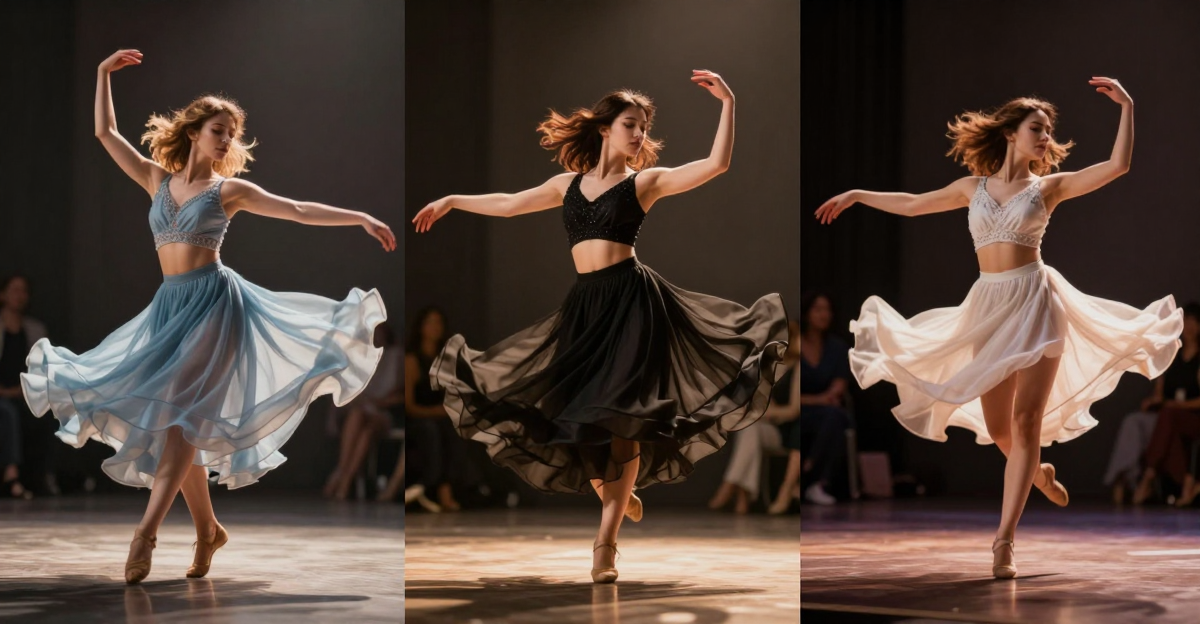
Real Imagera output: a shot generated from a written prompt in the browser.
The workflow is four steps and no install:
- Start from a prompt or a still. Type the shot, or upload an image and let the motion be generated from it. Image-to-video is the reliable path when the subject has to look like a specific thing.
- Set quality, resolution and aspect. Square, wide and tall are separate prices because they are separate render costs; the credit total updates as you change them.
- Read the button before you commit. The generate button carries the exact credit cost of that configuration — 15 to 70 credits for a standard five-second generation depending on quality, resolution and aspect, and 30 to 50 base credits for a longer-format render, doubled for a ten-second clip. No metered surprise after the fact.
- Finish the shot. Upscale, smooth motion, or hand the clip to the AI Smart Director to assemble a sequence, then cut the sequence into vertical variants with video-to-reels.
The limitation is stated plainly: these are five- and ten-second shots, not a 30-second single take. A minute-long piece is an assembly of shots, which is how most of this work is edited regardless. What you get in exchange is the ability to buy it today from anywhere, iterate at a price you can see before you spend, and keep the credit balance rather than a subscription that expires unused.

8.Which should you pick?
| If your job is… | The realistic pick right now |
|---|---|
| A 30-second unbroken take with one character | Wait for the API, build the reference set meanwhile — Imagera is adding Seedance 2.5 support when it opens |
| Dialogue with tight lip-sync | A model with native synchronised audio, or a lip sync tool that lip-syncs a portrait to your track |
| High-volume social shots, cut every 2-3 seconds | A per-generation studio you can buy from anywhere, at short lengths |
| Client work due this week, outside China | A studio you can sign into now with the finishing tools attached — not a reseller waitlist |
| Improving footage you already have | An enhancer, not a generator; regenerating finished footage is the expensive mistake |
9.Mistakes to avoid while the API is still closed
- Do not prepay a reseller for access to an endpoint ByteDance has not published. Ask for a generation ID from a real call first.
- Do not build a cost model on an estimate. Every "Seedance 2.5 price" figure published before the Ark model card is extrapolation, including the confident-sounding ones. The same discipline applies to announced-but-unshipped models generally — see what Alibaba has actually shipped for how wide the gap between announcement and availability gets.
- Do not default to 4K. It is the most expensive multiplier on every platform, and social delivery specs cap out well below it.
- Do not chase length you will cut anyway. Count the shots in your last three deliverables; if none ran longer than eight seconds, duration is not your bottleneck.
- Do not let the pipeline idle. Reference sets, prompt libraries and shot lists are model-agnostic. The teams that move fastest on day one are the ones who arrive with assets, not intentions.