Creative fatigue is the slow decline of an ad that used to work, because the audience has seen it too often to keep reacting. The ad, offer and targeting stay the same, but hook rate and click-through fall while cost per result climbs. The fix is new creative, which often means new versions of the winner and sometimes means a new concept.
What is creative fatigue, and why do my ads stop working?
Every ad has a limited pool of people who will respond to it. Early on, the platform finds the most responsive viewers quickly. As spend continues, the ad reaches people who have already scrolled past it, along with people who were never a good fit. The opening frame stops feeling new, so viewers swipe before the message lands.
The ad did not get worse. It got familiar. That is why a winner can fade even when the product, landing page and audience settings never change.
How can I tell if it's creative fatigue or something else?
Rule out the other causes before you brief new creative. Each one shows up differently in ads manager:
- Tracking or site problems: Clicks hold steady but conversions fall sharply overnight. Check your pixel, checkout and page speed.
- Offer or price changes: A promo ended or a price went up. Every ad drops at the same time, not just one.
- Auction pressure: CPM rises across the whole account during a busy season, while CTR stays flat.
- Account changes: A budget jump, a new bid strategy or heavy edits can reset learning and cause a dip that looks like fatigue.
- Creative fatigue: One ad, or one concept, declines gradually while other ads in the same account hold up. Frequency climbs as engagement falls.
Look for a gradual drop that is specific to one creative. If fresh ads in the same ad set perform fine, the old ad is tired. If everything fell together, look elsewhere.
Which metrics show creative fatigue, and when should I act?
Read these together, because no single metric is enough:
- Frequency: Rising frequency on the same audience means repeat exposure.
- Hook rate (thumb-stop rate): The share of viewers who stay past the opening. A falling hook rate with a steady hold rate means the opening is worn out, not the whole ad.
- CTR: A steady decline points to less interest in the message.
- CPM and cost per result: A rising cost per result while CPM stays stable means the ad is converting less efficiently.
Act on trends, not single bad days. TikTok's creative best practices recommend refreshing ad group creatives when delivery results show a consistently declining trend, or when daily new users are low.
Don't wait until the ad is dead. Have replacements ready while the winner is still delivering.
How do I fix fatigued ads: new concepts or just new hooks?
Match the fix to where the ad is breaking:
- Hook rate dropped, hold rate fine: The middle of the ad still works. Give it a new opening line or headline.
- Viewers know the face: Swap the creator and keep the same actions and script.
- The whole ad looks familiar: Move it to a new setting so it reads as a new ad in the feed.
- You're expanding to new markets: Translate the spoken lines or on-screen copy.
- The angle itself is spent: If every version of the idea declines quickly, you need a new concept. That means a new angle, a new script and usually a new shoot or creator brief. A variation tool won't solve this. Strategy and production work has to be done by hand.
When the message still lands and only the packaging feels tired, try variations first. Move to new concepts when the variations stop landing too.
How often should I refresh, and how should I test new ads?
There's no fixed calendar. Refresh when the metrics above trend down, and keep a pipeline so you are never stuck with one tired ad. TikTok suggests 3-5 different creatives per ad group.
A testing rhythm that holds up:
- Launch a small set of versions of your winner, each with one clear difference: hook, creator, setting or language.
- Name every version by what changed so you can read results in ads manager without guessing.
- Keep the versions that hold hook rate and CTR, pause the rest, and make more like the best.
- Make sure the versions are actually different. When only the words change, the audience often treats the new ad as the same ad.
What a refreshed ad looks like
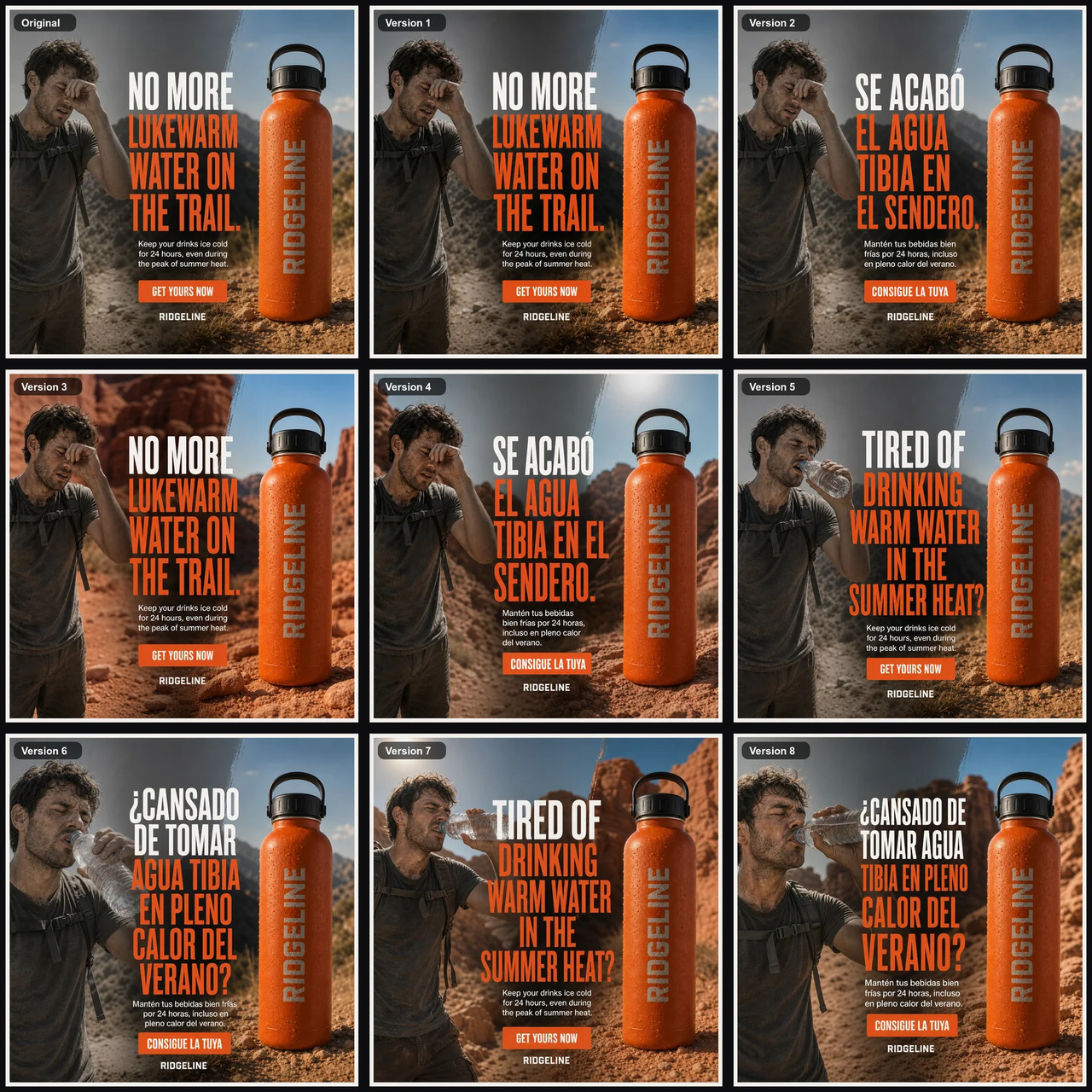
These sample versions were made in Ad Remakes from two source ads, a UGC video ad and the Ridgeline ad, each changed in a different way:
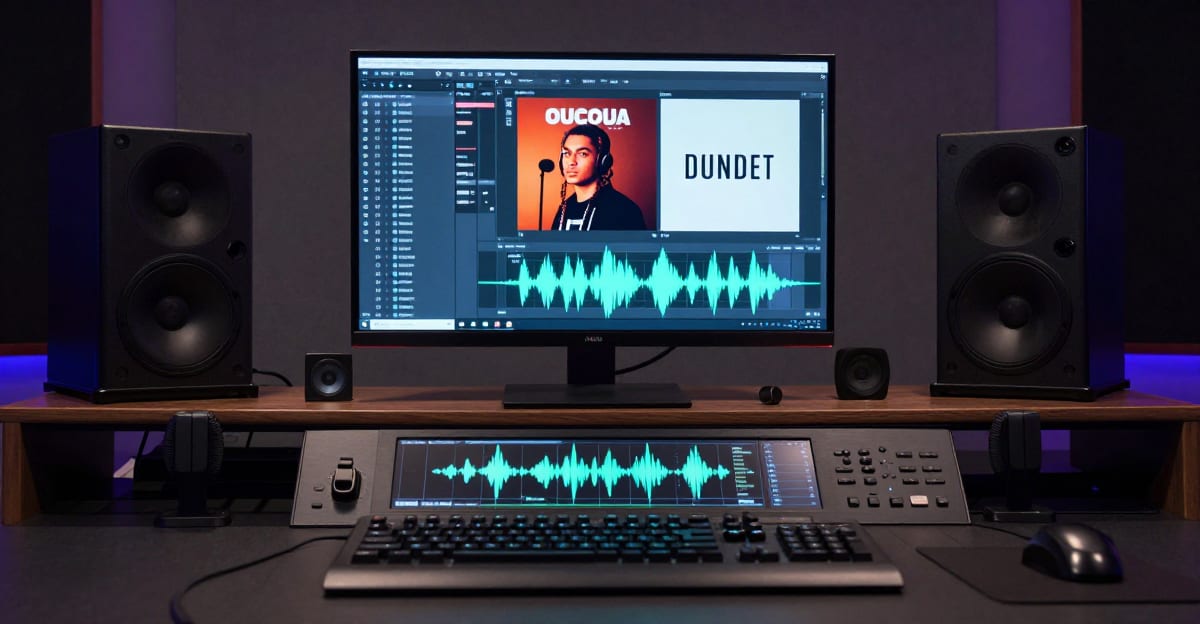
A UGC video ad remade with a new creator doing the same actions, the original playing in the corner. Real output, made in Ad Remakes.

The Ridgeline ad beside its version with a new opening headline. Real output, made in Ad Remakes.

The Ridgeline ad beside its version moved to a desert canyon. Real output, made in Ad Remakes.
The same UGC video ad remade, spoken in Spanish, the original playing in the corner. Real output, made in Ad Remakes.
How to make refreshed versions of a winning ad
Ad Remakes takes one ad that already works and turns it into a set of versions to test. It breaks the ad down beat by beat. You pick new hooks, creators, settings, languages and frames, and every version is made the same way. It keeps the pacing and camera of your original. Spoken lines can be redone in 7 languages, lip-synced, and image ads can have their headline and copy translated. You can also combine changes, such as a new hook, a new place and a new language in one version. You bring one video or image ad and get back a grid of versions named for upload. It is best suited to Meta, TikTok and Reels testing.
It refreshes ads you have already proven. It does not diagnose your account or invent a new concept. Use ads manager for the diagnosis and your own strategy for new angles.
Only use an ad you own or have the rights to.
Here's how to do it in Ad Remakes:
| You bring | What works | What to avoid |
|---|---|---|
| The ad | Your best performer, one clear subject, few cuts | Ads you do not own or have rights to |
| New creators | A saved Character ID or one clear face photo | Group shots or faces turned away |
| Product | Clean photos where it is fully visible | Blurry or cropped product photos |
- Upload your ad. A video or image ad you own, from your library or a new file.
- Check the breakdown. The hook, each beat, the words on screen, the product and the people: edit anything that is off.
- Pick what changes. Hooks, creators, settings, languages and frames; the count and the price update as you go.
- Keep the winners. Review the grid, download versions named for your ads manager, and make more like the best.
More detail on each step, with fixes for common problems: the Ad Remakes guide.
See the plans for what's included.
When versions don't come out right
- Versions look too alike: Change the creator or the setting, not only the hook. The variety check shows which versions are too close.
- The product drifts in a version: Add a cleaner product photo in the breakdown and run that version again.
- A spoken line is cut off: Shorten the hook line. Each version keeps the original ad's length.