Original sound, not re-encoded
Most MP4 and MOV videos carry AAC sound, which is copied into the M4A file as it is. No quality is lost.
Imagera AI - AI content creation platform for generating images, cloning voices, creating avatars, and enhancing videos. Privacy Policy | Terms
Video · free · private
Save the sound of a video as its own file: M4A, usually the exact sound the video carries, or uncompressed WAV. It runs in your browser, so your video never leaves your device.
The sound is extracted in your browser on your own device. Your video is never uploaded or saved on our servers.
 Real result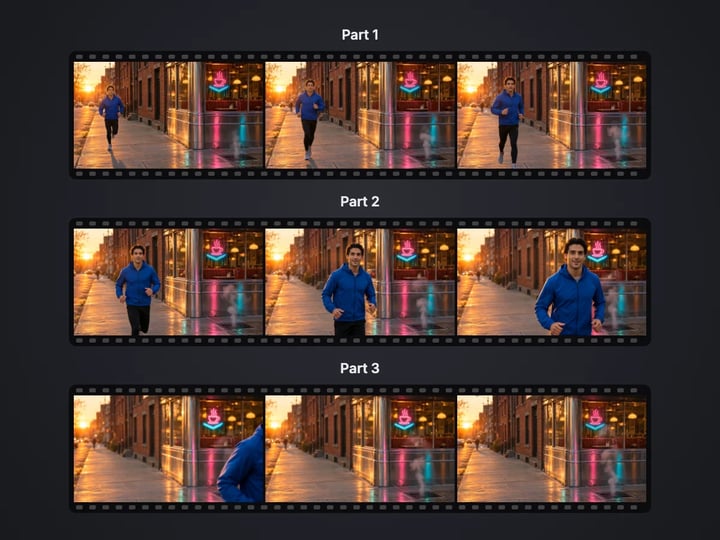
Quick answer
To extract audio from a video for free, open Imagera’s Video to Audio tool and choose your video. Pick M4A for a small file that plays on phones, computers and music apps, or WAV for uncompressed audio. Press Extract audio. For most MP4 and MOV videos, the M4A is the video’s own sound copied without re-encoding, so nothing is lost. It runs in your browser, so the video is never uploaded.
Your video never leaves your device — nothing is uploaded or saved on our servers.
How it works
Pick an MP4, MOV or WebM video, or an audio file. It stays on your device.
M4A for a small file that plays everywhere, WAV for uncompressed audio.
Press Extract audio, listen to the result and save it to your device.
Why this one
Most MP4 and MOV videos carry AAC sound, which is copied into the M4A file as it is. No quality is lost.
M4A is small and plays on phones, computers and music apps. WAV is uncompressed 16-bit audio for editing.
Drop in an MP3, WAV or other audio file to convert it to M4A or WAV the same way.
Copying the sound skips re-encoding, so even a long video finishes in seconds.
Continue in Imagera
Video to Audio edits the pixels you have. These studios use AI to create what is not in the picture yet — they run on credits.
 Next step
240p trash to 4K cinema. Every pixel rebuilt. Netflix-grade output.
Open studio Imagera
Too small to print? Enlarge a photo to 4K, 8K or 16K (15,360 px on the long edge).
Open studio Imagera
Edit images with Imagera Edit. Inpaint, modify, and transform any part of your image.
Open studio Imagera
Replace any photo background with AI-generated luxury scenes.
Open studioWho it is for
Keep a song, a performance or a voice memo that only exists inside a video, and play it in your music app.
Pull the audio from a recorded call or interview to edit, transcribe or publish as audio only.
Get an uncompressed WAV of a clip’s sound for your audio editor or video timeline.
Guide
This tool saves the sound of a video as its own audio file, in your browser. Choose a video, pick a format and press Extract audio.
There are two formats:
- M4A is a compressed audio file using AAC, the same kind of sound most MP4 and MOV videos already carry. When that is the case, the sound is copied into the M4A without re-encoding, so it is bit-for-bit the audio from your video and the extraction takes seconds. - WAV is uncompressed 16-bit audio. It is much larger, but audio editors, transcription tools and some older software prefer it.
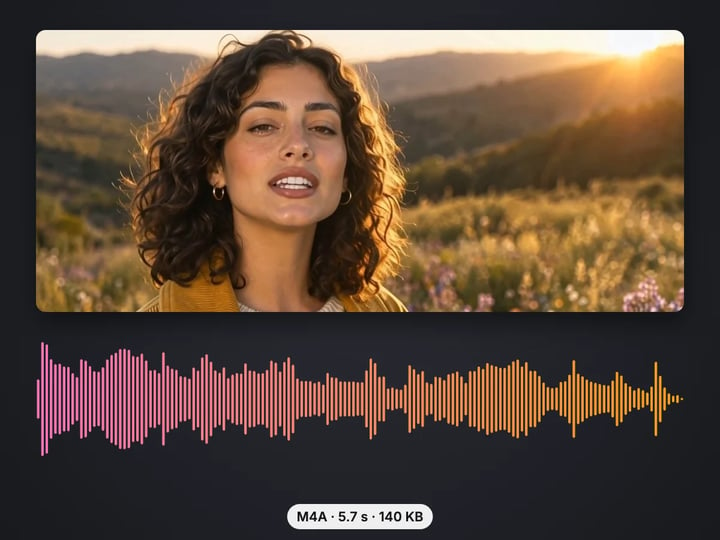
The result shows the format, length, file size and either "Original, not re-encoded" or the sample rate and channels of the new file, with a player so you can listen before downloading.
You can also drop in an audio file, such as an MP3 or a WAV, to convert it to M4A or WAV the same way.
1. Choose your file. MP4, MOV and WebM videos work, and so do audio files such as MP3, M4A and WAV. 2. Pick a format. M4A is the default and right for most people: small, and usually identical to the video’s sound. Choose WAV if an editor or another tool asks for it. 3. Press Extract audio. Most videos finish in a second or two. 4. Listen with the player to check it. 5. Download the file.
If the video has no sound track, the tool tells you so instead of producing a silent file.
A few combinations depend on your browser. Turning a WebM video’s sound into M4A needs your browser’s audio encoder; if it has none, the tool asks you to choose WAV, which works in every up-to-date browser.
Many people search for "MP4 to MP3". This tool makes M4A instead, and the honest reason is licensing: the MP3 encoders a website could include come under licenses this site does not use.
For most uses, M4A is the better file anyway:
- It plays where you need it. iPhone, iPad, Mac, Android phones, Windows, most music apps and media players, and most car systems from recent years play M4A. - It is usually lossless here. Most MP4 and MOV videos already store their sound as AAC, the audio inside an M4A. Copying it avoids a second round of compression, which any MP3 made from the same video would add. - It is smaller at the same quality. AAC sounds as good as MP3 at a lower bitrate.
If a device or site truly accepts only MP3, WAV is the safe fallback, because every audio converter reads it.
When the M4A is copied from the video, its quality is exactly the video’s: the same bitrate, sample rate and channels. A typical phone video carries about 128 to 256 kbps stereo AAC, so a minute of sound is roughly 1 to 2 MB.
When the sound has to be converted to AAC, for example from a WebM video, the tool encodes at 96 kbps per channel, which is transparent for speech and music on phones, headphones and speakers.
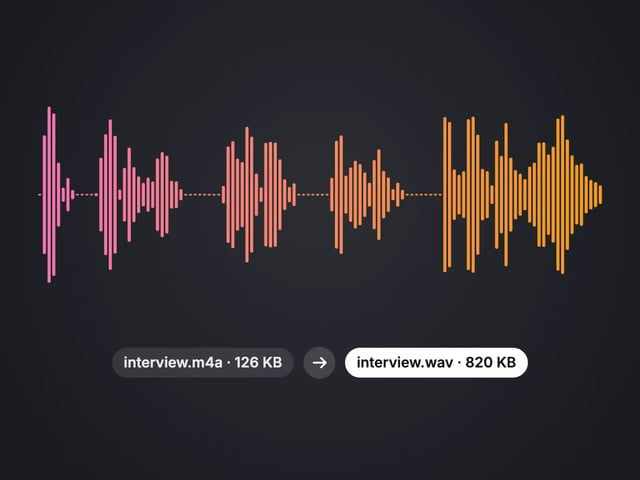
WAV is uncompressed 16-bit audio, usually at 44.1 or 48 kHz. That is about 10 MB per minute for stereo, so a one-hour recording is around 600 MB. Choose it for editing or when a tool asks for WAV; choose M4A for everything else.
Extracting the sound never makes it better than it was. A noisy phone recording stays noisy; this tool keeps the sound faithful rather than changing it.
Your video never leaves your device. It is read from your device, the sound track is taken out in your browser, and the audio file is handed back to you. Nothing is uploaded or saved on our servers.
That means no upload wait. Most online converters need the whole video uploaded before they can start, which can take many minutes for a long recording. Here the sound is usually ready in seconds.
It also means your recordings stay yours. Calls, interviews, lessons and family videos often contain voices and conversations that should not be copied to someone else’s server.
The tool needs an up-to-date browser: Chrome, Edge or Firefox from the last couple of years, or Safari 16.4 or newer. Per run it handles up to 60 minutes on a computer and 15 minutes on a phone. A free sign-in, needed after your first few downloads, never sends your video anywhere.
The free Video to Audio tool saves the sound of your video as M4A or WAV on your device, usually without re-encoding. Extracting is unlimited. Your first few downloads need no account, and after that a free sign-in keeps them going.
Often the sound is only half of what you want to keep. If you are also keeping the video, for a channel, an archive or a project, its picture may be soft, noisy from low light or recorded at a low resolution.
The paid Imagera AI video enhancer works on that picture. It sharpens soft footage, reduces noise and grain, and upscales low-resolution clips to HD or 4K in the cloud, then exports a finished video with its sound. It uses credits.
Save the audio here for listening or editing, and enhance the video there when the picture matters as much as the sound.
Free vs studio
Questions people ask
Choose your MP4 here, keep the format on M4A and press Extract audio. The sound is usually copied as it is, so it takes seconds and loses nothing.
No. This tool makes M4A or WAV. M4A plays on phones, computers and music apps and is usually the exact sound of the video; choose WAV if a device only accepts MP3-era formats.
Yes. Android phones, the built-in players on Windows and Mac, and most music apps play M4A, as do iPhone and iPad.
Open this page in Safari, choose the video from Photos or Files and press Extract audio. The M4A is the video’s own sound, extracted on your phone.
Not for most MP4 and MOV videos: the AAC sound is copied into the M4A without re-encoding. Only sound in other formats, such as WebM, is converted.
Choose WAV for audio editors, transcription tools or software that asks for uncompressed audio. It is about ten times larger than M4A.
Yes. WAV works in every up-to-date browser. M4A needs your browser’s audio encoder; if it has none, the tool asks you to choose WAV.
Yes. Drop in the MP3 and choose WAV or M4A. The conversion happens in your browser.
No. The sound is taken out of the video in your browser. Your video is never uploaded or saved on our servers.
This tool only saves the sound. The paid AI video enhancer sharpens, removes noise and upscales the video itself in the cloud.
More free tools
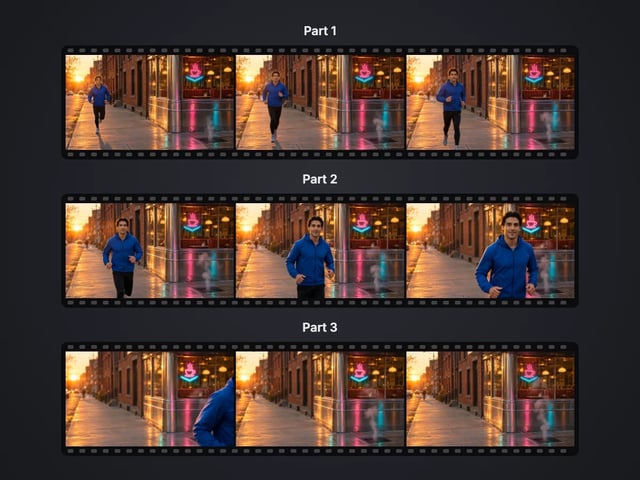
Cut a big video into evenly sized parts
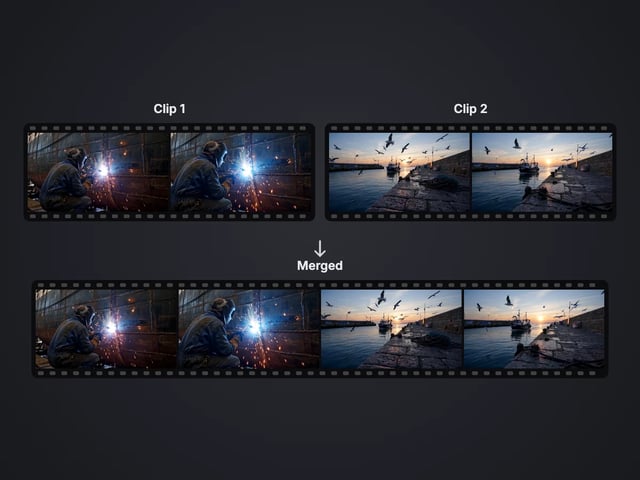
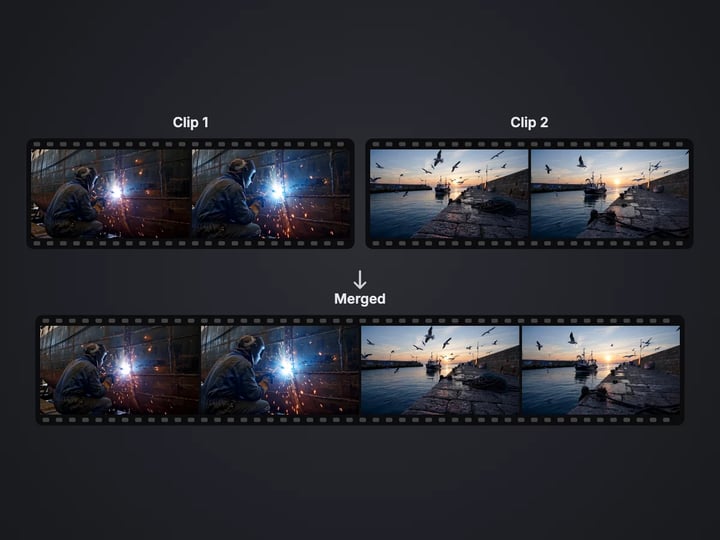
Rejoin split parts back into one file

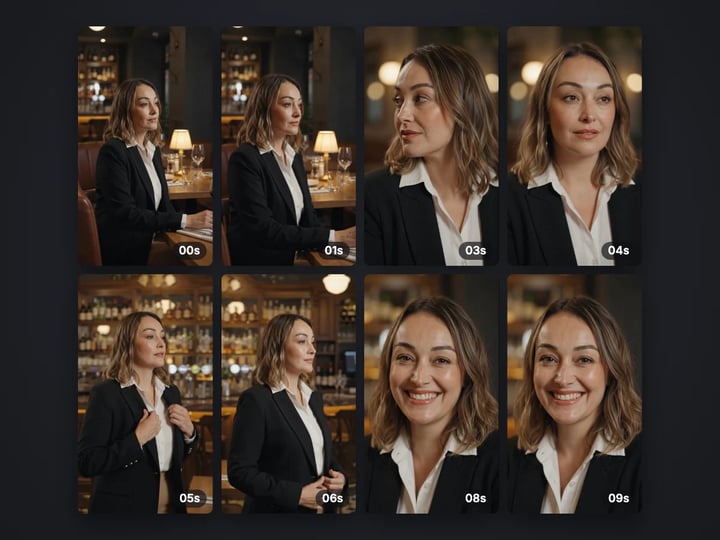
Save stills from a video as JPG or PNG
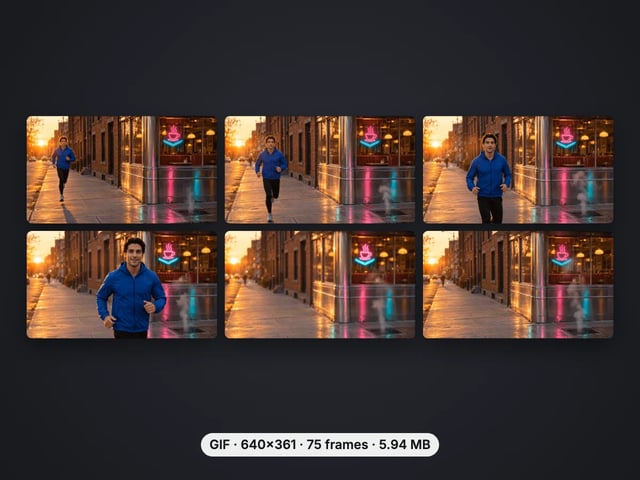
Turn a video clip into an animated GIF
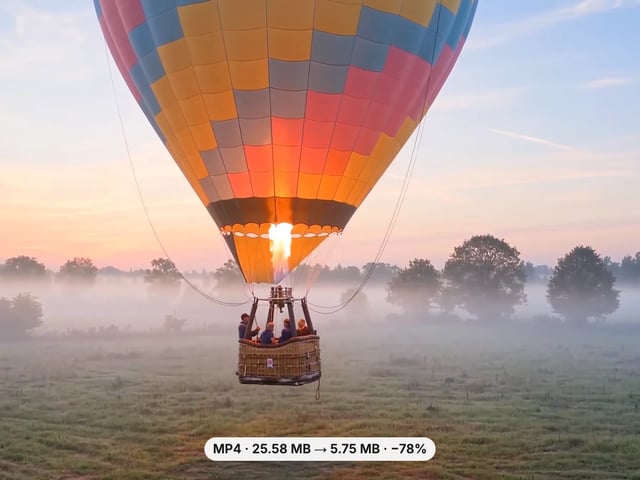
Make a video file smaller, or remove its sound
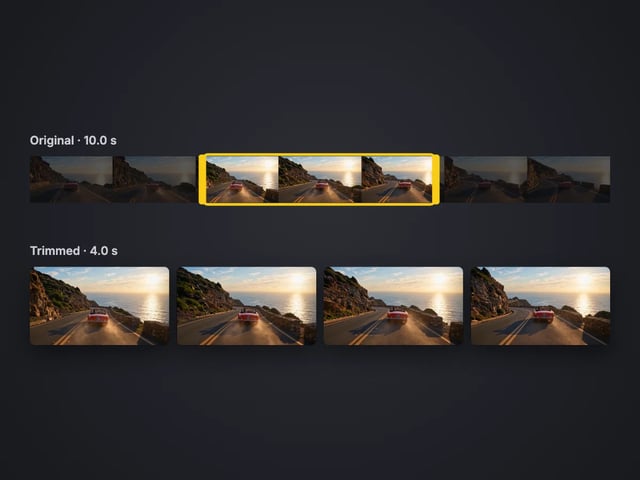
Cut the start or end off a video, no quality loss
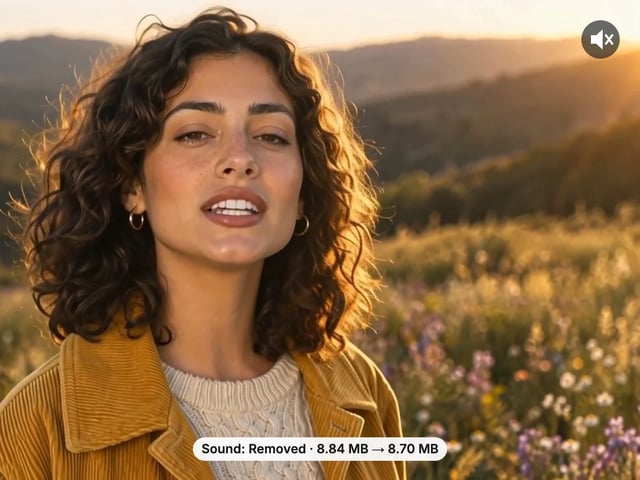
Remove the sound from a video, picture untouched
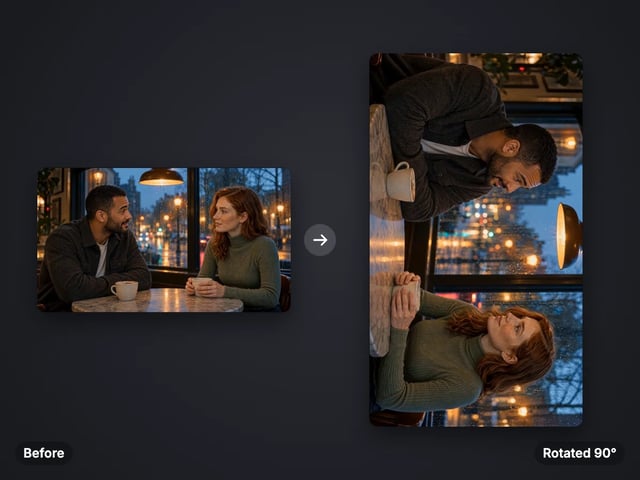
Turn a sideways video upright, or mirror it
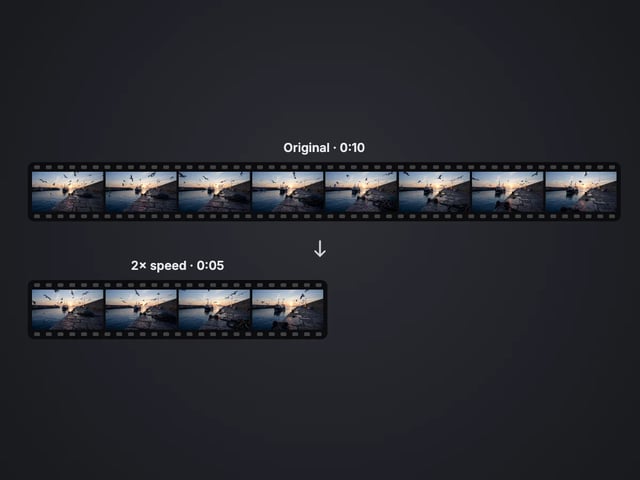
Speed a video up or slow it down, 0.25× to 4×
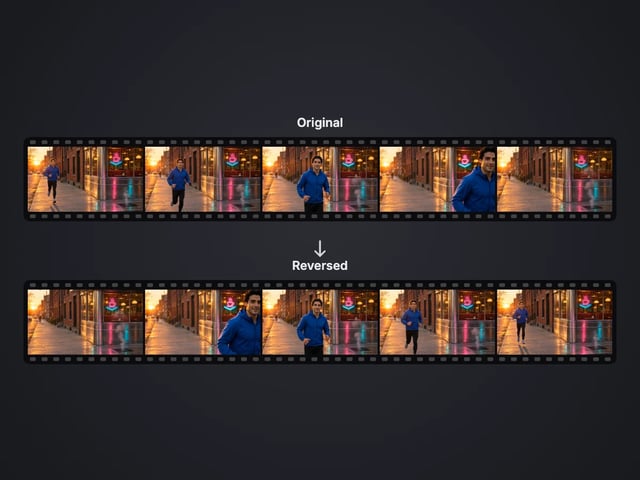
Play a clip backwards, sound included
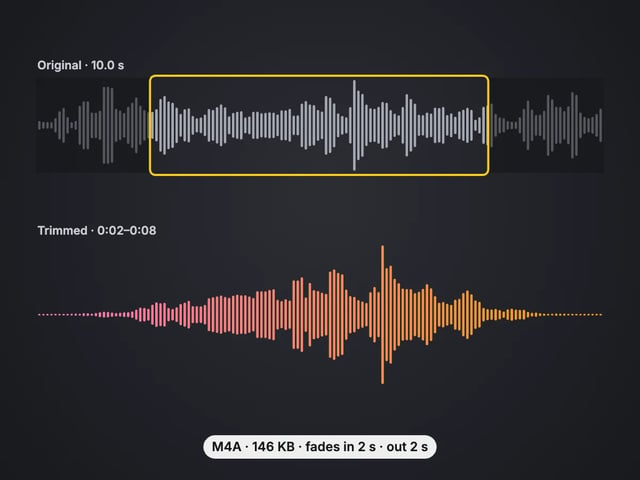
Cut an audio file to the part you want, with fades
Convert MP3, WAV or OGG to M4A or WAV
Complete your workflow
These pair with 4K Video Enhancer. Every tile says what the tool actually does — without leaving this page.
Upscale images to 16K with the same AI enhancement technology
Create AI talking videos then enhance to 4K
Generate AI podcasts and pair with enhanced video content
Translate a clip into another language. Same faces, same footage, new voice — billed per minute.
Choppy AI video to butter-smooth 60fps. The secret pros use.
One photo = Hollywood drone shot. Zero equipment. Pure magic.
Steal any dance. Apply to any character. Viral content factory.
Imagera AI Team
Unified AI creation platform